Lining and pipe bursting solve different problems
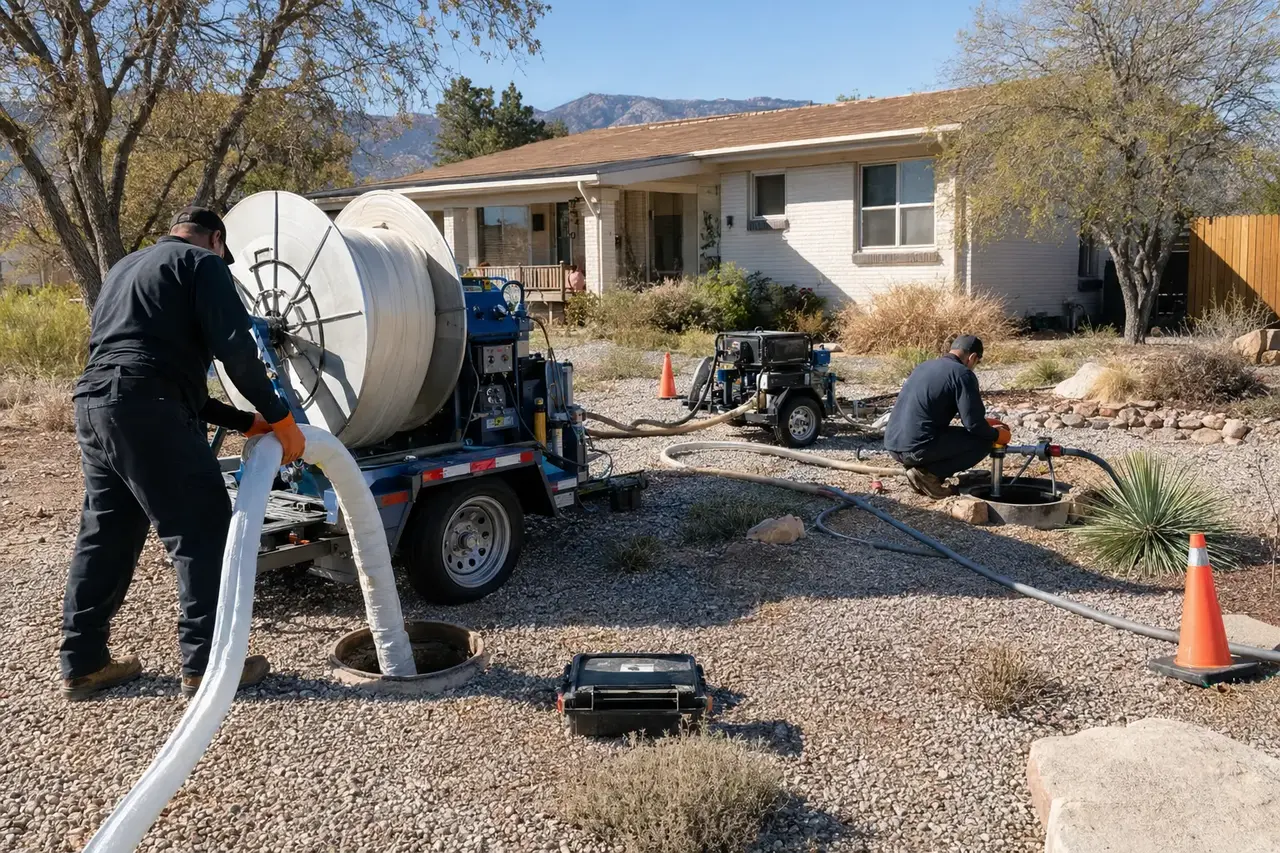
Cured-in-place pipe lining creates a new liner within a cleaned host pipe. Pipe bursting pulls a replacement pipe through the route of the old line and generally requires access pits. Both approaches can reduce disruption compared with a continuous open trench, but they solve different conditions.
A camera inspection and accurate locating are essential. Heavy collapse, severe deformation, major bellies, poor slope, or certain connection layouts can make an open excavation more appropriate.
- A usable path through the existing pipe
- Access for cleaning and installation equipment
- Defects compatible with the selected method
- A plan for reconnecting branches and cleanouts
Compare the digging avoided, not just the method name
A trenchless proposal should state the method, liner or replacement material, length, diameter, access pits, cleaning requirements, reconnections, testing, restoration, and warranty. Any sections that still require excavation should be identified.
Less digging does not automatically mean lower cost. The value may come from avoiding extensive concrete, driveway, landscaping, or interior floor removal. Compare the total scope and restoration burden for each option.
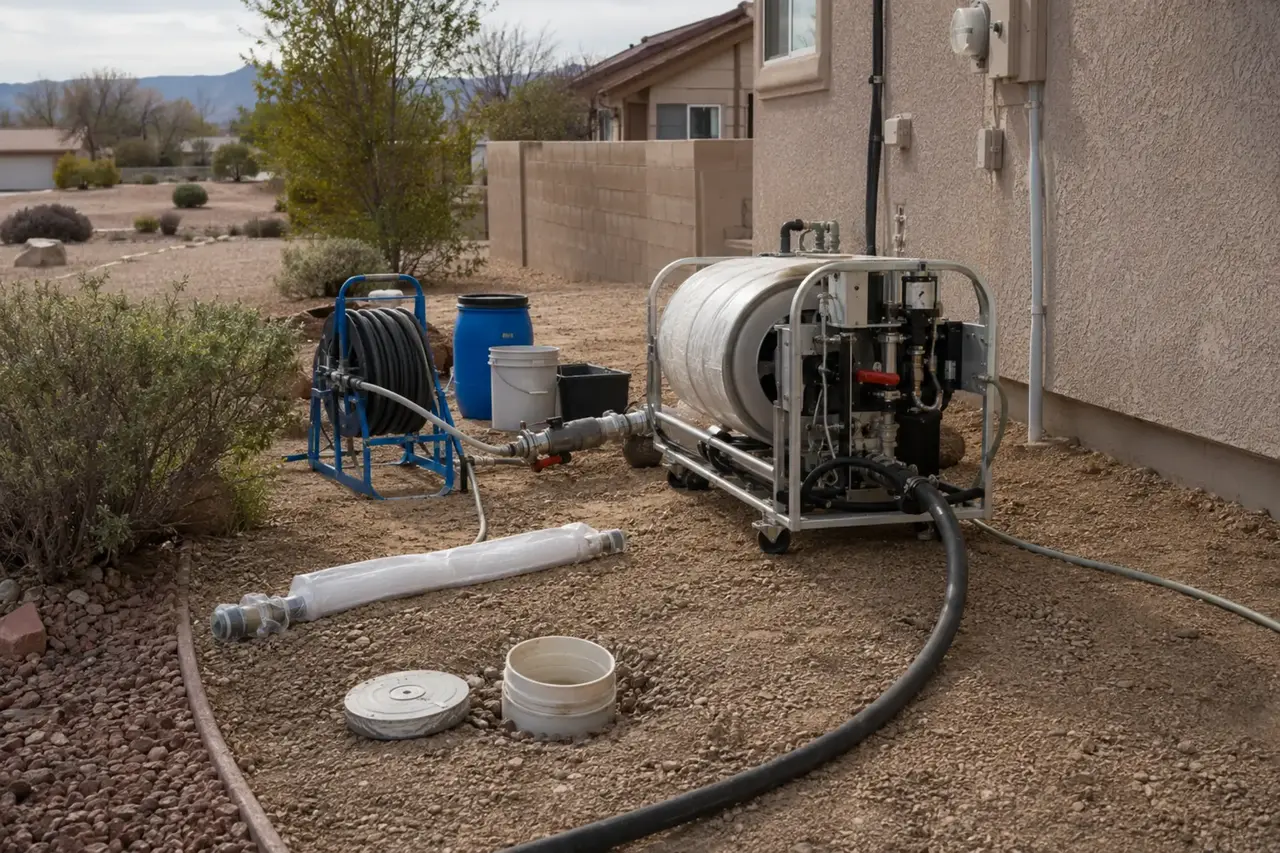
Cleaning, measurement, connections, bends, offsets, grade, and structural condition determine whether lining or pipe bursting is appropriate.
Cured-in-place pipe lining explained
Cured-in-place lining inserts a resin-saturated liner into a cleaned host pipe and cures it to form a new structural or semi-structural pipe within the old route. The host line must be opened, cleaned, measured, and evaluated for suitability. Access, diameter, bends, branches, deformation, and water infiltration affect whether the liner can be installed and cured correctly.
Lining can seal compatible cracks, small openings, and joints along the treated length while reducing continuous excavation. It follows the existing shape, so a belly, poor grade, or major offset generally remains unless separately excavated and corrected. Branch connections and liner ends also require careful treatment. The proposal should identify the liner system, design assumptions, length, thickness, curing method, reconnections, testing, and warranty.
Pipe bursting and other replacement methods
Pipe bursting uses a bursting head to split or displace the old pipe while pulling a new pipe behind it. It can replace a full run without opening the entire route, but launch and receiving pits are still required. The route, soil, nearby utilities, connections, old pipe material, and available working space determine feasibility.
Bursting may allow replacement with a similar or larger pipe, but it is not automatically appropriate near fragile utilities, tight crossings, severe misalignment, or structures. Open excavation may still be needed at the building, tap, cleanouts, or obstacles. A hybrid approach can be the most practical when only part of the route is suitable for trenchless installation.
A smaller excavation does not remove the need for cleaning, measurement, access, and final inspection.
- 01Symptoms
Record which fixtures are affected, when the problem began, and whether it returns.
- 02Access
Identify a usable cleanout or another safe point for the required equipment.
- 03Evidence
Clean, inspect, and locate as needed to document the actual underground condition.
- 04Scope
Match the service method and restoration plan to what the evidence supports.
Conditions that can rule out trenchless work
A complete collapse can block liner installation. Severe deformation can prevent proper liner contact. A long belly or incorrect slope cannot be corrected simply by lining the existing shape. Large offsets, missing pipe, protruding connections, certain diameter changes, and inaccessible branches can also require excavation before or instead of trenchless work.
The value of trenchless repair is often tied to what it avoids. Beneath landscaping or open soil, conventional excavation may be simpler. Beneath a finished driveway, interior slab, mature landscape, or other expensive surface, reduced excavation can offer substantial restoration savings. Compare the complete property impact, not only the pipe-installation price.
A trenchless proposal still needs exact limits and testing
The proposal should include pre-cleaning and post-cleaning video, line measurements, method qualification, access-pit locations, liner or new-pipe specifications, branch treatment, cleanouts, curing or installation controls, testing, final video, restoration, exclusions, and warranty. Conditions that could change the method or price should be identified before preparation begins.
The proposal should explain why the chosen system matches the defect. Statements such as 'no digging' or 'works for every pipe' deserve caution because pits, reconnections, cleanouts, or spot repairs may still require excavation. The best proposal is specific about both advantages and limits.
- Host pipe qualification
- Access and pit locations
- Slope and alignment limitations
- Branch and connection treatment
- Final camera verification
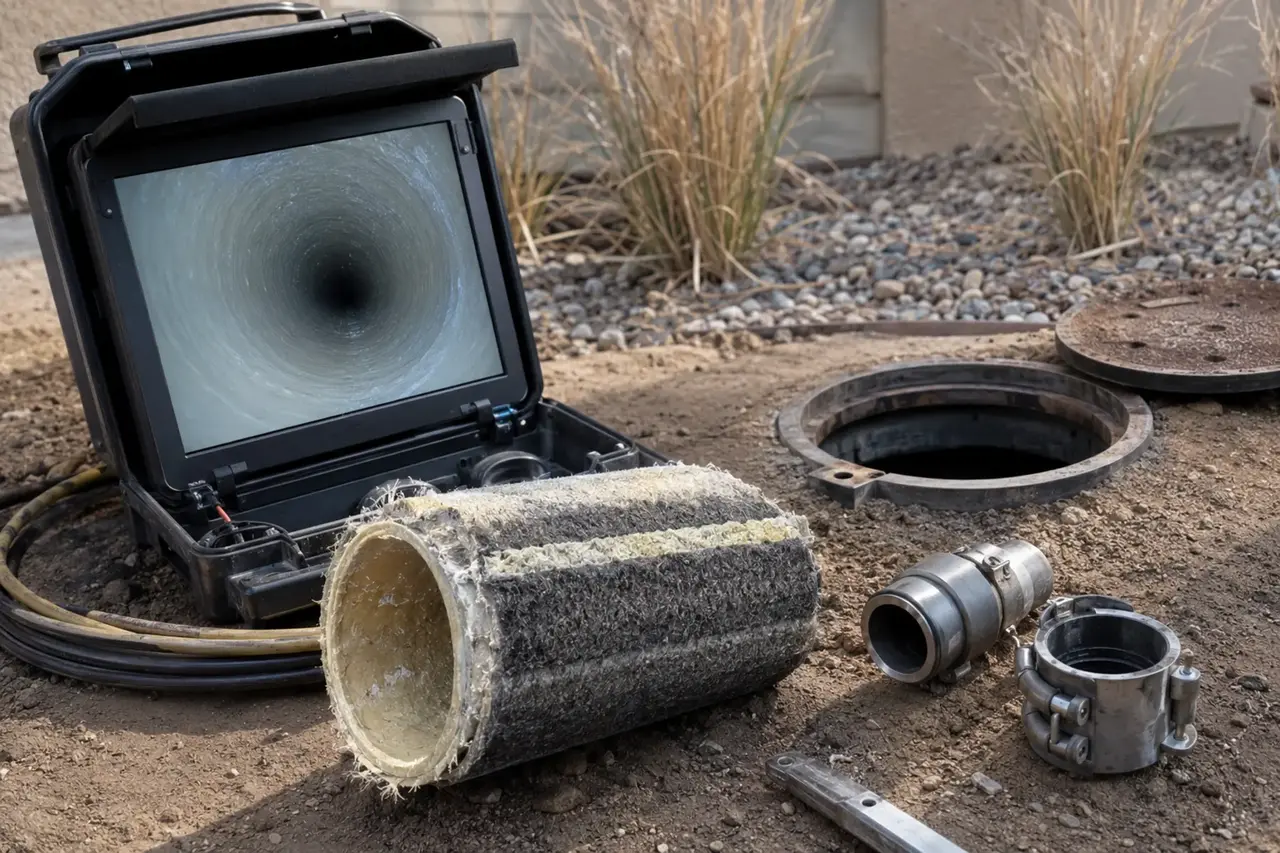
Post-installation camera work can confirm the liner profile, reopened branches, transitions, and visible defects before completion.
Quality-control steps for trenchless installation
Trenchless work depends heavily on preparation and process control. The host line should be measured, cleaned, and evaluated after cleaning. Liner dimensions, resin handling, curing conditions, and end treatment affect the result. Pipe bursting requires correct pulling equipment, access pits, connection planning, and awareness of nearby utilities and surface movement.
The installation record should define the measured parameters and what constitutes acceptance. Final camera inspection should confirm that the liner or new pipe is open, ends are finished, branches are reinstated where applicable, and no installation defect restricts flow. Required municipal inspection or testing should be completed before pits are restored.
Warranty language deserves the same attention as the method. Review covered defects, excluded conditions, term, transferability, claim procedure, and whether the warranty applies to flow, structural performance, workmanship, or only materials. Keep the pre-work video, preparation record, installation data, final video, permits, invoice, and warranty together.
- Verify post-cleaning qualification
- Document installation controls
- Inspect every connection and end
- Understand exactly what the warranty covers
Saving the surface matters only if the pipe qualifies
Trenchless marketing often emphasizes preserved landscaping or concrete, but surface savings cannot override pipe qualification. A method that avoids a driveway while leaving incorrect grade or failing to cross a collapse is not a complete repair. Qualification should be documented before restoration savings are used to justify the price.
Conversely, open excavation should not be assumed necessary simply because it is familiar. When the host line is suitable, lining or bursting may reduce disruption, project duration, and restoration uncertainty. Compare both the underground result and the complete property impact. The better option is the one that solves the observed defect with a clearly defined final condition.
Material, cracks, joints, offsets, corrosion, roots, and surrounding usable pipe.
Depth, route, utilities, structures, pavement, landscaping, and equipment space.
Testing, backfill, cleanup, restoration, records, exclusions, and warranty.