Where water jetting does its best work
Jetting can be useful for grease, soap residue, sludge, mineral accumulation, fine roots, and recurring commercial kitchen buildup. Rear-facing nozzle jets propel the hose and move loosened material toward an access point or downstream system.
The line should be understood before aggressive cleaning. A badly broken, collapsed, or fragile pipe may require a different approach. Proper containment and downstream capacity also matter.
- Recurring grease or sludge
- Heavy wall buildup seen on camera
- Preparation for lining
- Roots compatible with the selected nozzle
Pressure cannot repair pipe geometry
Water pressure cannot realign an offset, correct slope, eliminate a belly, close a crack, or rebuild missing pipe. It may expose the defect after deposits are removed, which makes the post-cleaning camera inspection valuable.
The cleaning plan should state how debris will be captured, whether the full line is accessible, what pressure range is planned, and how fragile pipe conditions are handled.
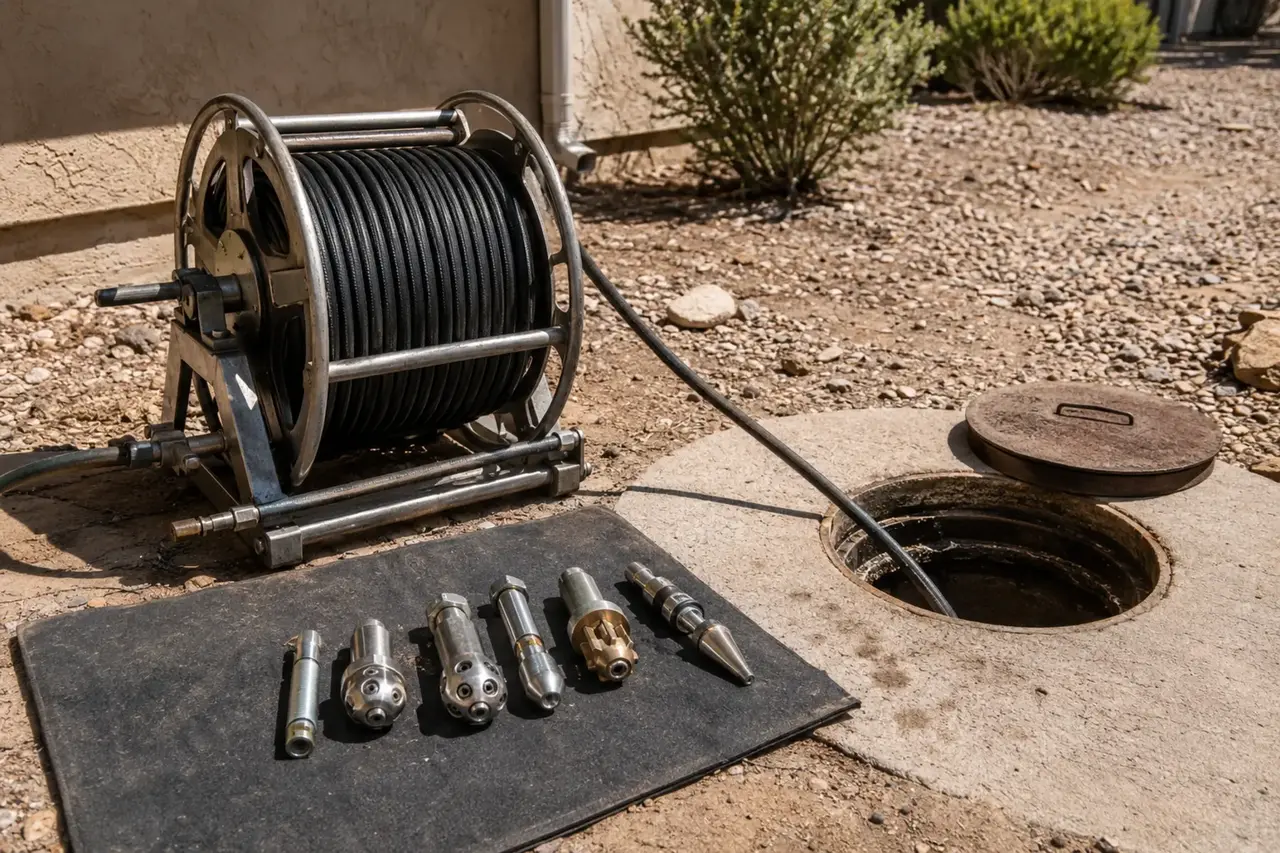
Jetting can remove stubborn buildup, but the line should be evaluated for fragile material, structural defects, and safe downstream flow.
How hydro jetting equipment works
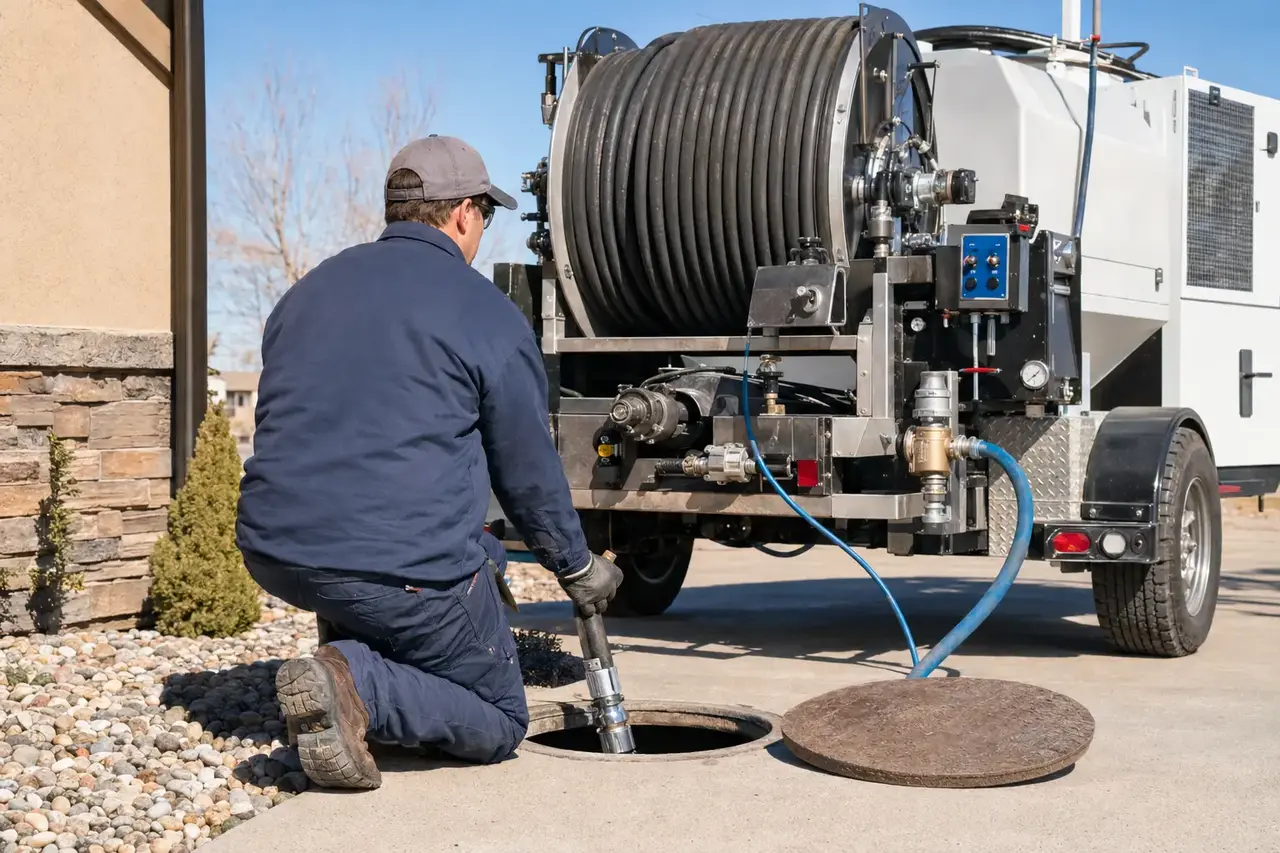
A jetter pumps water through a hose and purpose-built nozzle. Rear-facing jets propel the hose and move loosened material back through the line, while forward or radial jets cut and scour deposits. Nozzle selection, pressure, water flow, and travel speed affect cleaning performance and must match the pipe diameter and condition.
Effective jetting is more than sending a hose downstream. The operator needs adequate access, a plan for loosened debris, awareness of downstream capacity, and control of water near occupied spaces. Grease and sludge may need repeated passes. Roots may require specialized nozzles or preliminary mechanical cutting. Camera verification shows whether the wall is clean enough for inspection or lining preparation.
Good candidates and important limitations
Hydro jetting is often considered for grease, soap residue, soft scale, sludge, sediment, and some root growth. Restaurants and commercial kitchens may use it as part of a maintenance plan when interceptor performance and disposal practices are also addressed. Residential lines with recurring wall buildup can benefit when the pipe is structurally able to tolerate the work.
A jet cannot correct a belly, realign an offset, replace missing pipe, or close a crack. Severely deteriorated, fragile, collapsed, or poorly connected lines can require reduced pressure, another cleaning method, or structural repair. A camera image taken before aggressive cleaning helps prevent assumptions about what the pipe can safely tolerate.
Pipe strength, access, nozzle, pressure, and downstream flow all affect the method.
- 01Symptoms
Record which fixtures are affected, when the problem began, and whether it returns.
- 02Access
Identify a usable cleanout or another safe point for the required equipment.
- 03Evidence
Clean, inspect, and locate as needed to document the actual underground condition.
- 04Scope
Match the service method and restoration plan to what the evidence supports.
Hydro jetting before camera inspection or lining
Deposits can hide cracks, joints, corrosion, and small defects. Cleaning the wall improves the quality of a condition assessment. Lining systems typically require a prepared host pipe, and jetting may be one part of that preparation along with mechanical cutting, measurement, and drying.
Preparation standards should be tied to the proposed work. A quick maintenance jet and a liner-preparation cleaning are not necessarily the same scope. The scope should explain how cleanliness is verified, whether protrusions or roots are mechanically removed, how water is controlled, and whether a final camera pass is included.
Know what the water and loosened debris will encounter
The jetting plan should identify the expected obstruction or buildup, relevant camera findings, nozzle and operating approach, debris handling, and any fragile sections. Confirm that the full route is accessible and whether the downstream system can accept the water and material.
The estimate should explain whether post-jet camera inspection is included and what happens if cleaning reveals structural damage. If jetting is recommended as recurring maintenance, the maintenance recommendation should explain why the material forms, whether use or grease control can be improved, and what evidence supports the proposed interval.
- Pipe condition evaluated
- Nozzle matched to material
- Debris and water controlled
- Post-cleaning camera verification
- Structural defects addressed separately
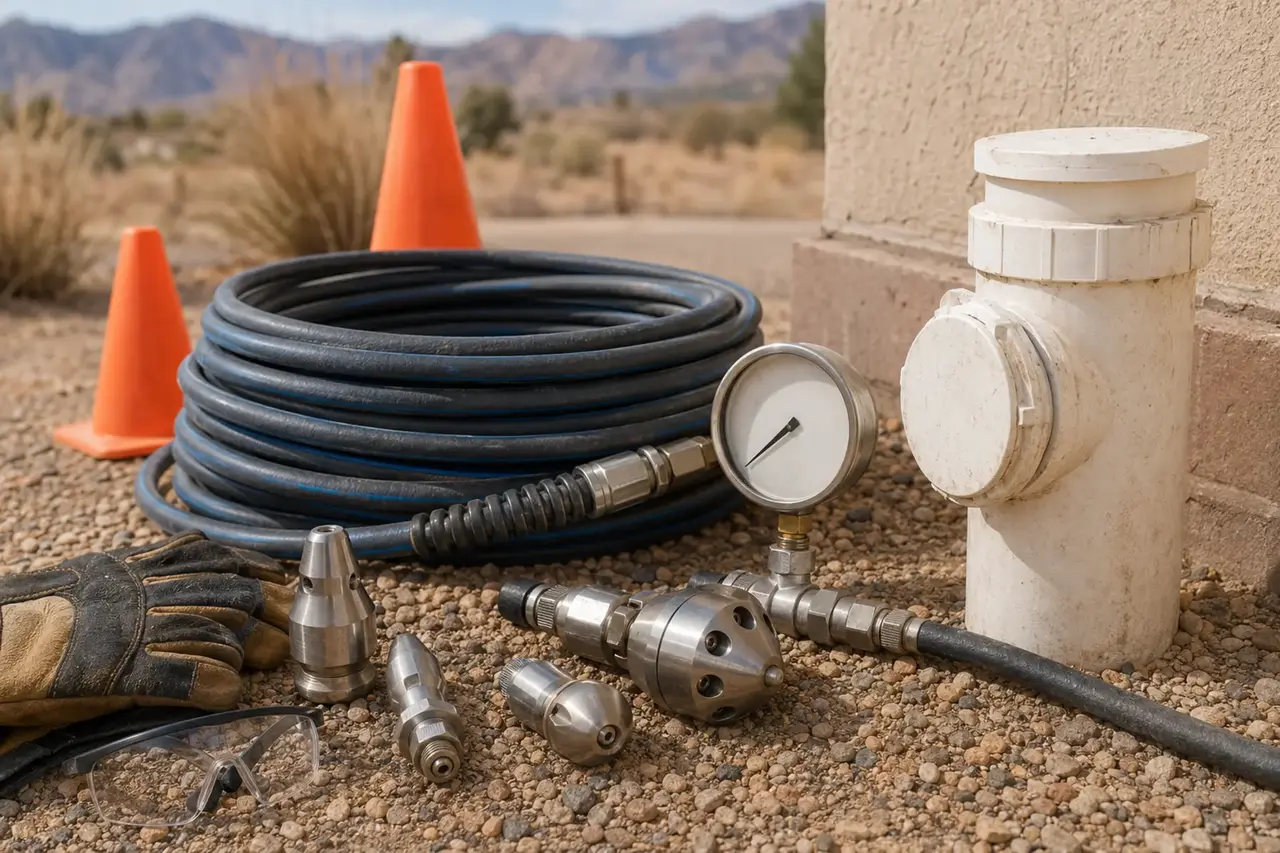
Access, downstream capacity, pipe strength, and post-cleaning inspection all affect whether jetting is a sensible choice.
Plan the water, access, and debris before jetting
Confirm which cleanout will be used, where water and loosened debris will travel, and whether interior fixtures need protection. The operator may need space for a trailer or jetting unit, hose route, water supply, and debris handling. Vehicles, customers, tenants, pets, and landscaping should be kept clear of the work zone.
On commercial properties, discuss grease-interceptor condition, operating hours, food-service shutdowns, and downstream capacity. Jetting a branch into an already restricted main can shift rather than solve the problem. The sequence should address downstream sections before upstream buildup when conditions require it.
After jetting, camera verification should document what remains on the wall. Note any cracks, roots, roughness, offsets, or standing water revealed by cleaning. If the line was prepared for lining, confirm that cleanliness meets the installation requirements rather than relying on a general statement that the line was jetted.
- Plan access and water control
- Protect occupied areas
- Clean in the correct sequence
- Verify results with a camera
Environmental and wastewater-system considerations
Material removed from a sewer must move to an appropriate wastewater destination or be captured and disposed of correctly. Jetting should not direct sewage, grease, roots, or contaminated water onto streets, storm drains, soil, or surface water. Commercial grease and unusual industrial residue can require additional handling considerations.
On a septic-connected property, high water volume and loosened material can affect the tank or downstream system. The operator should understand where the building sewer discharges and whether the receiving system can accept the cleaning process. Sewer and septic arrangements should be confirmed before equipment is selected.
Material, cracks, joints, offsets, corrosion, roots, and surrounding usable pipe.
Depth, route, utilities, structures, pavement, landscaping, and equipment space.
Testing, backfill, cleanup, restoration, records, exclusions, and warranty.