
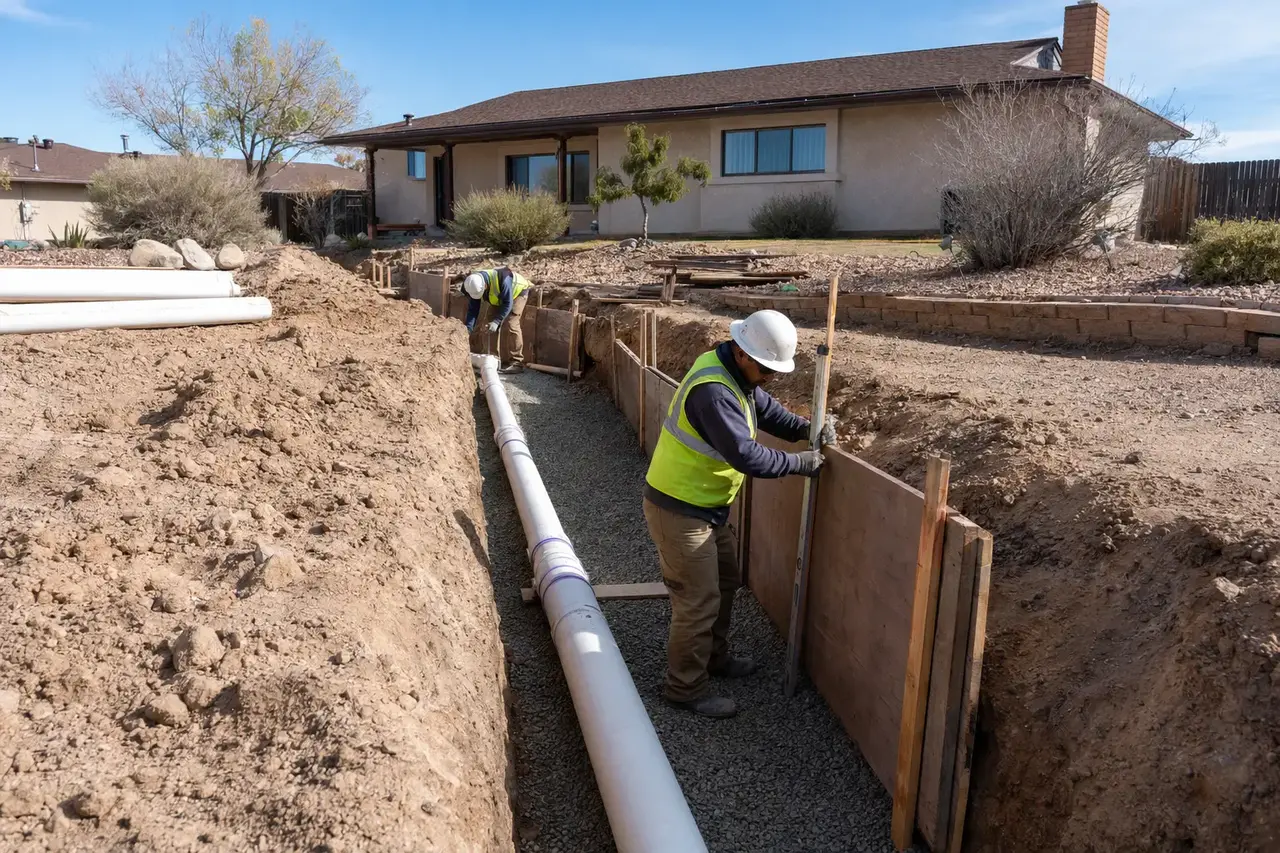
One failed section or a failing line?
A camera image of one isolated break may support a spot repair. Multiple offsets, severe corrosion, a long belly, missing pipe sections, or repeated root entry along the line can favor replacement. Age alone does not decide the issue—the observed condition and failure pattern matter more.
Replacement proposals should identify the start and end points, approximate depth, new pipe material, cleanout work, permit assumptions, and surface restoration. Comparing scopes is more useful than comparing bottom-line prices alone.
- Collapsed or badly deformed pipe
- Failures across multiple sections
- Persistent backups despite proper cleaning
- Line configuration that cannot be lined reliably
What changes once the line is located
Length and depth affect excavation, equipment, labor, and disposal. Access matters as well: a line beneath open soil is different from one beneath a driveway, patio, finished basement, retaining wall, or mature landscaping.
In Pueblo-area soils, drainage and proper backfill are important considerations. The proposal should explain how the new line will be bedded, sloped, connected, tested, and protected against settlement before the trench is closed.
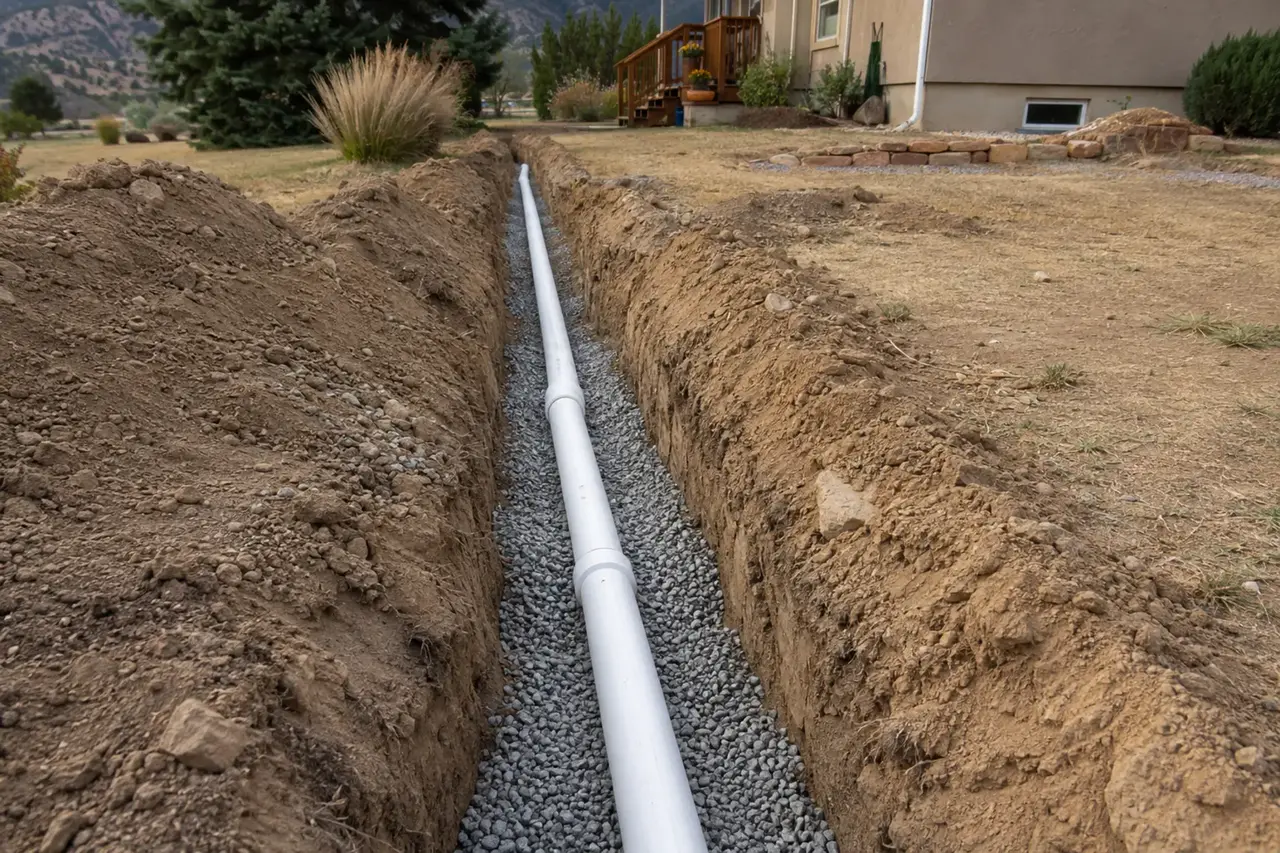
Replacement quality is shaped by the complete installation—not simply the material placed in the trench.
When another small repair stops making financial sense
Replacement is usually considered when the lateral contains widespread deterioration, several significant offsets, extensive root entry, repeated failures, a long belly, deformation, or collapse. It can also be appropriate when a previous repair addressed one section but inspection shows the remaining line is approaching failure. The decision should be based on the length and severity of observed conditions rather than age or material alone.
A complete camera recording helps show whether the problem is isolated or distributed. If the camera cannot pass a collapse, surface locating and excavation may be necessary to expose the first failed section. Once exposed, the damage may continue farther than the camera could show. The proposal should explain how additional footage will be priced and who authorizes changes.
Open-trench and reduced-excavation replacement approaches
Traditional open-trench replacement exposes the route so the old pipe can be removed, grade can be established, and new bedding and piping can be installed. It is direct and flexible, especially when alignment must change, but it creates the largest restoration area. Access for excavators, spoil storage, shoring, utility clearance, and material delivery can influence the schedule and cost.
Pipe bursting pulls a new pipe through the route of the old pipe while breaking or displacing the host material. It can reduce continuous trenching but normally requires launch and receiving pits and may not be appropriate near certain utilities, fittings, structures, or badly misaligned sections. A replacement project may combine methods—for example, open excavation at connections with reduced-excavation work along a clear run.
A replacement decision connects the failed line to access, grade, connections, and restoration.
- 01Symptoms
Record which fixtures are affected, when the problem began, and whether it returns.
- 02Access
Identify a usable cleanout or another safe point for the required equipment.
- 03Evidence
Clean, inspect, and locate as needed to document the actual underground condition.
- 04Scope
Match the service method and restoration plan to what the evidence supports.
Slope, bedding, backfill, and verification
A sewer replacement must do more than install new material. The line needs continuous drainage, stable support, properly made connections, adequate cleanout access, and protection from settlement or construction loads. Bedding supports the pipe uniformly. Backfill and compaction affect whether the restored surface later settles or whether the pipe loses alignment.
Before the trench is closed, the work may be visually inspected or tested as required. A post-installation camera can document the interior, joints, slope indicators, and connection. Keep the camera file, photographs, measurements, material information, permits, inspection records, and warranty with the property records. These documents are valuable during future maintenance or a sale.
The project is not complete when the pipe is buried
Surface restoration can be a major part of replacement. A route beneath open soil may require grading and landscaping; a route beneath a driveway can require concrete or asphalt removal and replacement. Irrigation, fencing, retaining walls, mature plants, interior slabs, flooring, and traffic areas should be discussed before work begins. A pipe-only price may not represent the total cost to return the property to use.
The estimate should distinguish excavation, pipe installation, permits, testing, backfill, haul-away, and each restoration item. Clarify whether matching concrete color, asphalt appearance, landscaping maturity, or decorative finishes is possible. New patches can remain visible even when function is fully restored. A clear scope reduces disagreement after the sewer itself is complete.
- Defined replacement limits
- Material and diameter
- Cleanout configuration
- Inspection and testing
- Backfill and compaction
- Surface restoration by area
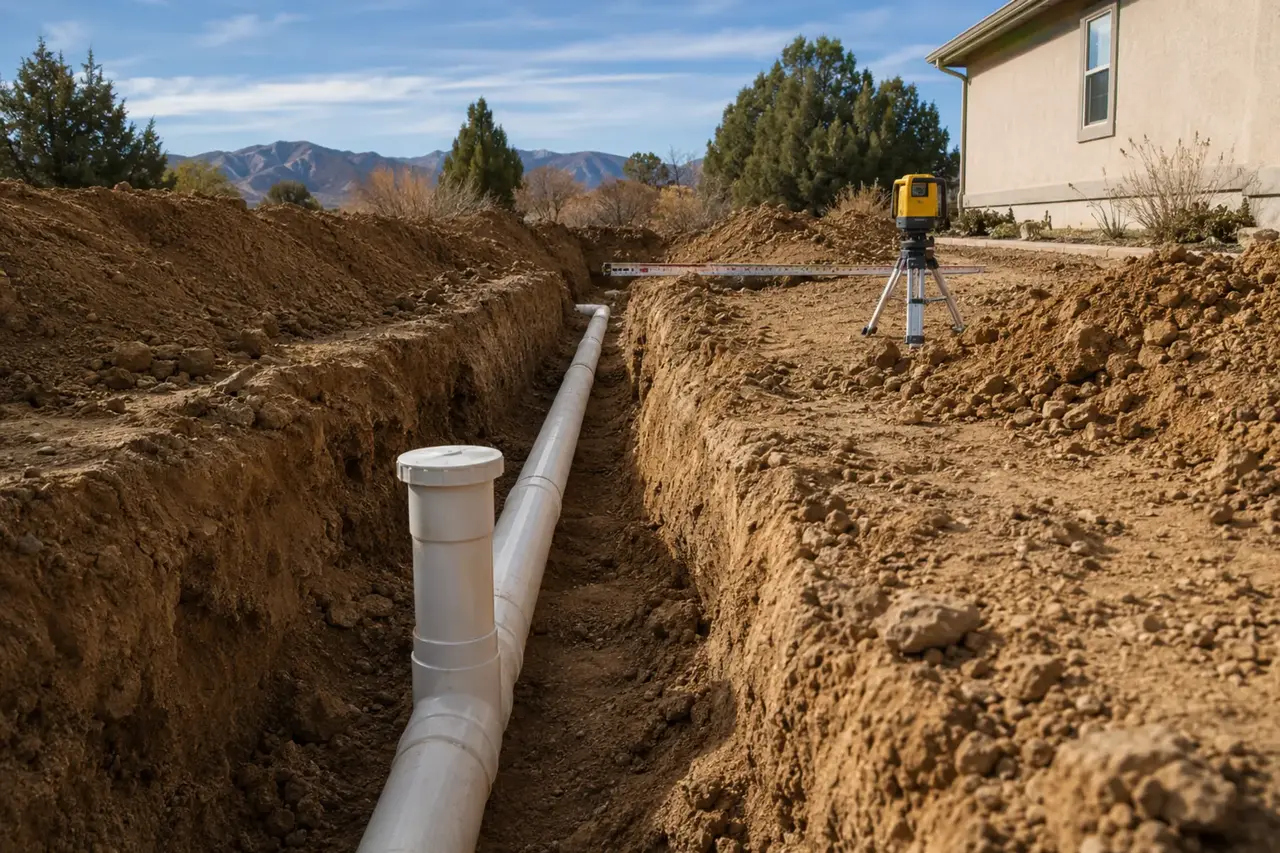
Grade, cleanout access, transitions, testing, and recorded locations should be confirmed while the new line is still visible.
Before work starts: access, utilities, and daily routines
Replacement can temporarily interrupt toilets, sinks, kitchens, laundry, and tenant operations. Confirm the expected shutdown window, whether limited plumbing use is possible, how occupants will be notified, and what happens if the project extends beyond the planned schedule. Commercial or multifamily properties may need temporary sanitation arrangements and staged work.
Walk the route before mobilization. Identify irrigation, private lighting, fences, gates, valuable plants, pet areas, exterior equipment, concrete, and delivery constraints. Required public utility marks do not necessarily include every privately installed line. Discuss protection or separate locating for irrigation, propane, secondary electric, and other private systems.
After installation, monitor restored surfaces for settlement and follow care instructions for concrete, asphalt, sod, or landscaping. Keep the as-built route, pipe material, cleanout positions, inspection approvals, post-work camera, and warranty. A replacement is a major property improvement, and complete records can support future maintenance and disclosure.
- Plan plumbing downtime
- Walk and document the route
- Identify private utilities
- Retain as-built and warranty information
Decide how much pipe to renew—and how it will be reached later
Not every replacement must run from the building to the public main. A partial replacement can address a deteriorated material or failed route while leaving verified serviceable pipe in place. The transition points become important: new material should connect to sound pipe, and the owner should know what remains, where it is, and how old it may be.
Consider cleanout access as part of the design. Replacement creates an opportunity to place accessible cleanouts for future inspection and maintenance. A small added scope during open excavation may prevent repeated fixture removal or difficult access later. The final property sketch should show both the new route and every remaining older section.
Material, cracks, joints, offsets, corrosion, roots, and surrounding usable pipe.
Depth, route, utilities, structures, pavement, landscaping, and equipment space.
Testing, backfill, cleanup, restoration, records, exclusions, and warranty.