Trusted Colorado Sewer ServiceProudly serving Pueblo, Pueblo West & Colorado Springs

From first symptom to finished surface

The Complete Sewer Line Repair Process

A quality project is more than digging and replacing pipe. It begins with diagnosis, defines a repair suited to the defect, and ends with verification, records, and restoration.

01

Triage the symptoms

Determine whether one fixture, a branch drain, the main building sewer, or a septic component is likely involved. During an active backup, stop unnecessary water use and protect people from contaminated areas.

Which fixtures are affected?Where is the lowest overflow?Is the problem active or intermittent?What has already been attempted?
02

Locate access and utilities

Find usable cleanouts, identify the likely line route, and arrange required utility marking before excavation. Interior access may not provide a complete view of the exterior lateral.

Cleanout size and locationProperty and utility recordsDriveways, patios, walls, or landscapingPublic right-of-way considerations
03

Clean enough to inspect

A camera cannot provide a useful structural evaluation through heavy standing sewage or a complete obstruction. Mechanical cleaning or hydro jetting may be needed to restore flow and visibility.

Type of obstruction removedDistance reachedCondition after cleaningWhether the problem immediately returns
04

Camera and locate

Record the pipe interior, identify material and defects, and use a transmitter to mark important locations and estimated depth from the surface.

Cracks, holes, or collapseRoots and entry pointsOffsets and separated jointsStanding water or bellies
05

Choose the repair method

Compare targeted excavation, open-trench replacement, cured-in-place lining, pipe bursting, or maintenance-only cleaning against the actual condition and access constraints.

Does the method correct the defect?Can the pipe accept a liner?Does slope need correction?What surface disturbance remains?
06

Define scope and price

A useful estimate describes the pipe limits, material, access, permits, testing, restoration, exclusions, schedule, warranty, and change-order rules.

Start and end pointsNew pipe or liner specificationsIncluded restorationHidden-condition allowances
07

Permits and preparation

Permit and inspection requirements depend on the location and work. Work near utilities, streets, easements, or the public connection can require additional coordination.

Permit responsibilityUtility locatesAccess and equipment stagingTraffic or neighbor impacts
08

Complete the repair

Expose or access the line, remove or rehabilitate the damaged section, make watertight connections, maintain required slope, and install or improve cleanout access when included.

Pipe bedding and supportConnection qualitySlope and alignmentProtection of other utilities
09

Inspect and test

Verify the completed work before covering it. Depending on the project, this may include visual inspection, camera verification, flow testing, or municipal inspection.

Post-work camera recordRequired inspection approvalCleanout accessibilityFinal defect location documentation
10

Backfill and restore

Backfill and compaction affect settlement. Surface restoration may include soil, landscaping, concrete, asphalt, flooring, fencing, or irrigation depending on the route.

Compaction methodExcess soil removalSurface restoration limitsCare instructions and warranty records
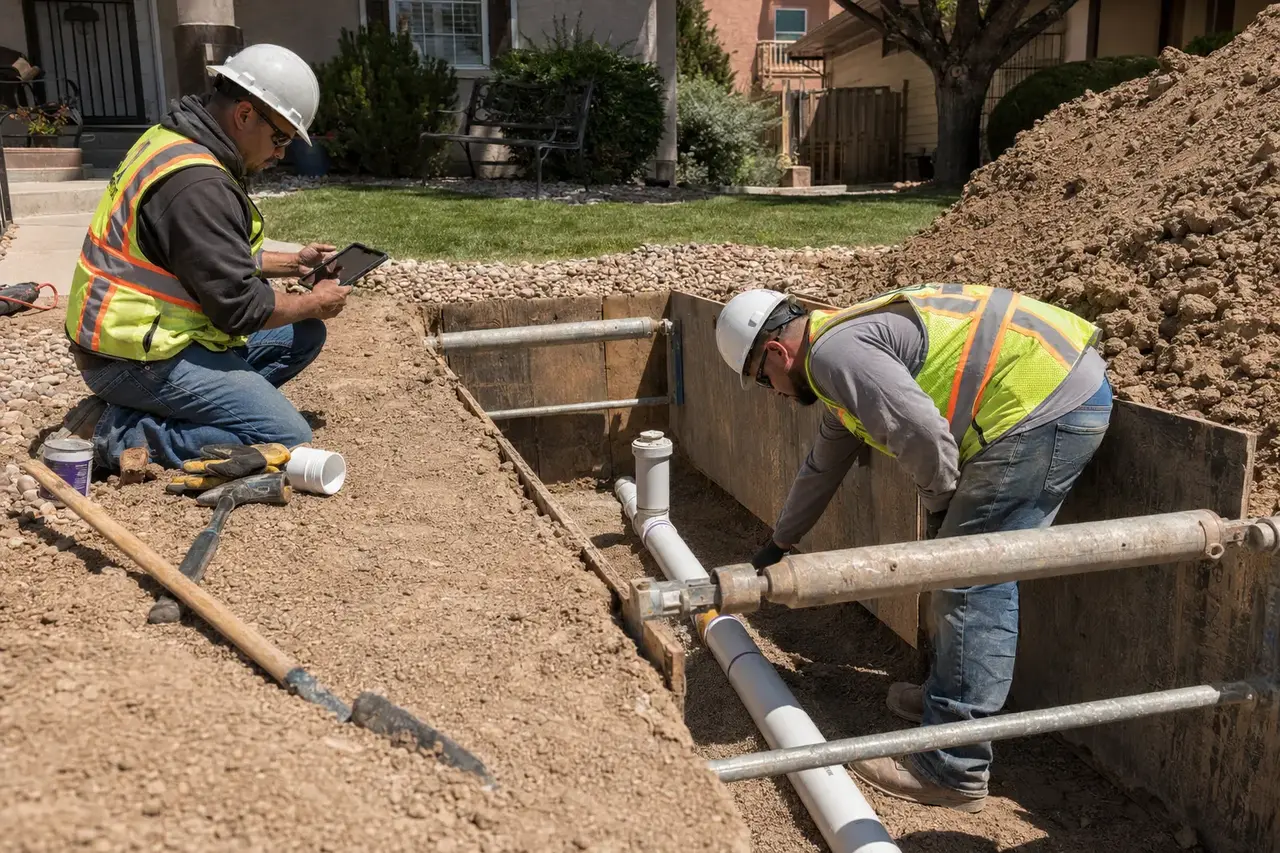
Technicians inspecting a newly installed sewer pipe before backfill at a Pueblo property
Verify before coveringInspection is most useful while the repair is still visible.

Pipe support, alignment, connections, cleanout access, and required approvals should be checked before backfill and surface restoration.

Decision point

Why the camera does not choose the method by itself

The camera documents the inside of the pipe, but the method also depends on depth, route, access, connections, slope, soil, utilities, surface improvements, and the condition of the host pipe. The same visible crack can lead to different recommendations at two different properties.

Documentation

What to keep after the work

Save before-and-after video, locator information, permits, inspection approvals, photographs, invoices, dimensions, material specifications, warranty terms, and restoration records.
Ready for the first step?

Start with the property, symptoms, and any inspection already completed.

Get Help Now