The signs point to the main sewer—not a single drain
One slow fixture often points to a branch drain. Several fixtures backing up together, sewage appearing at the lowest drain, or repeated main-line clogs can indicate a problem in the building sewer between the property and the public connection or septic system.
Older pipe materials can crack, corrode, separate at joints, or admit tree roots. Soil movement and poor bedding can also create low spots that hold wastewater and debris.
- Multiple drains slow or back up together
- The problem returns after snaking or jetting
- A sewer scope shows a crack, offset, root mass, or collapse
- Sewage odors or damp areas appear near the line route
Let the location and condition choose the repair
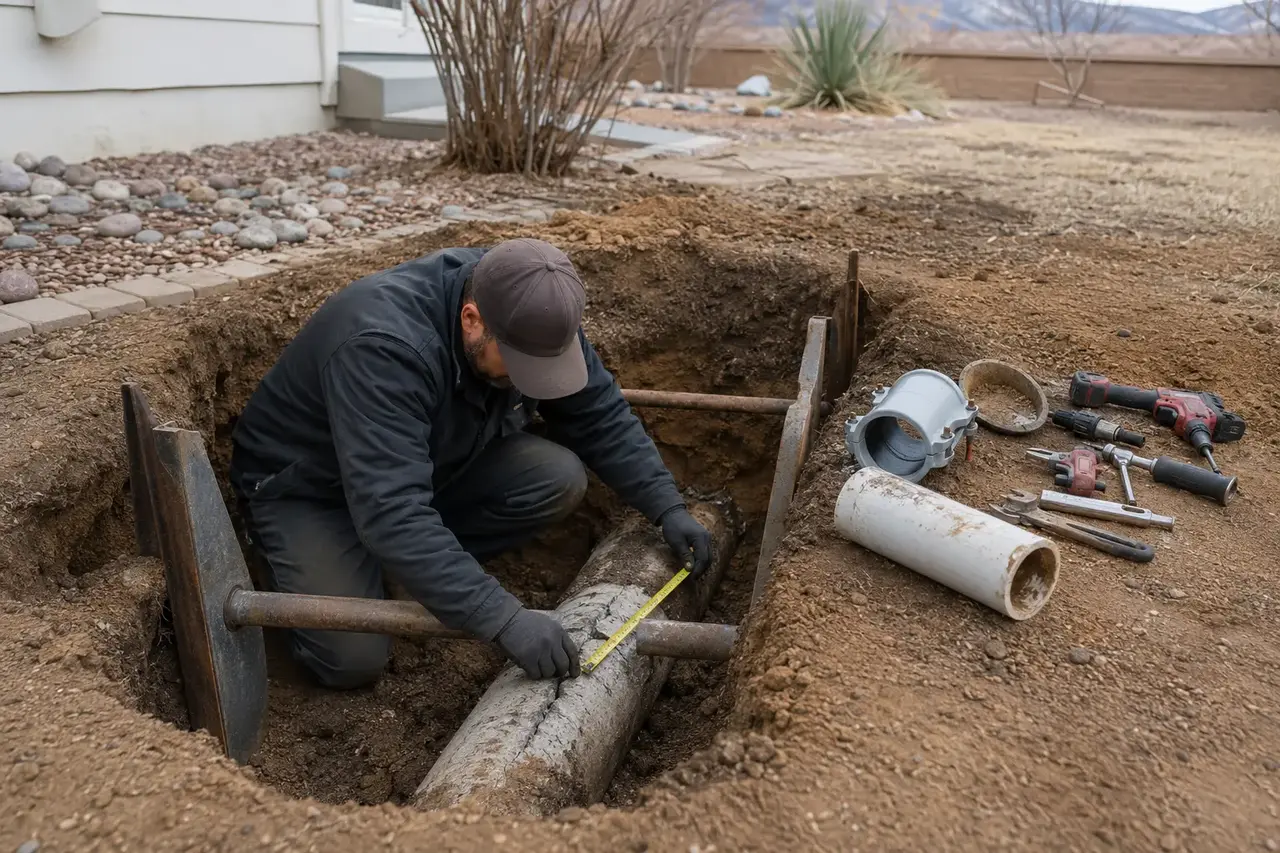
The right repair begins with the location, depth, pipe material, and extent of damage. A short failed section may be accessible through a targeted excavation. A structurally sound pipe with suitable geometry may qualify for a trenchless lining approach. A severely deformed or collapsed line may require excavation and replacement.
The camera findings, proposed repair limits, restoration responsibilities, and warranty terms should be documented in writing. If excavation crosses landscaping, concrete, fencing, or a driveway, clarify which restoration work is included in the estimate.
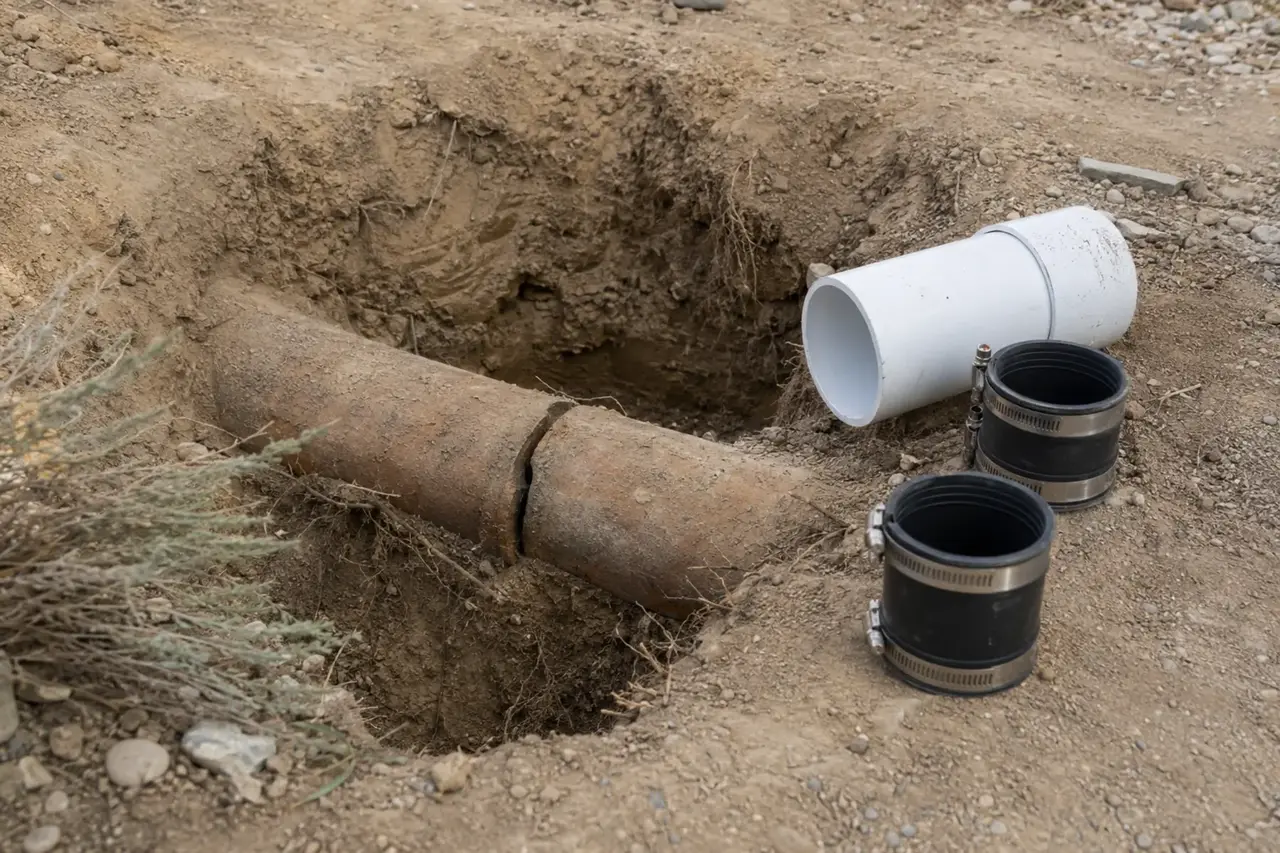
The exposed condition, connections, alignment, support, testing, and restoration all belong in the final repair scope.
A recurring backup needs more than another quick clearing
A useful evaluation begins by separating a fixture or branch-drain problem from a main building-sewer problem. The affected fixtures, lowest point of overflow, timing, frequency, and response to water use help establish where to begin. An accessible cleanout can then provide a safer and more complete route for cleaning and camera inspection than removing a toilet or forcing equipment through a small branch.
When the line is blocked, flow may need to be restored before the pipe wall can be evaluated. After cleaning, the camera should travel as far as practical toward the public connection or septic component. Important findings include pipe material, changes in diameter, joint condition, root entry, corrosion, cracks, standing water, offsets, connections, and the distance reached. A transmitter can then relate the recorded defect to a surface location and estimated depth.
- Record which fixtures are affected
- Clean only as aggressively as the pipe condition allows
- Retain camera video and locator marks
- Confirm whether the complete lateral was viewed
The defect—not the sales pitch—chooses the method
Targeted excavation is often appropriate for a severe localized offset, puncture, transition failure, or collapsed section. Direct access allows the failed material to be removed and the alignment, bedding, slope, and connections to be rebuilt. The tradeoff is surface disruption, which may include soil, landscaping, concrete, asphalt, fencing, or interior flooring depending on the route.
Cured-in-place lining can seal compatible cracks and joints inside a host pipe that remains open, reasonably aligned, and structurally suitable. Lining follows the existing route, so it does not automatically correct a belly or poor slope. Pipe bursting can replace some lines while limiting continuous trenching, but it still needs access pits and a suitable route. Full replacement becomes more reasonable when damage is extensive, grade must be corrected, or multiple repairs would leave a largely deteriorated line in place.
Repair limits should follow documented damage rather than guesswork.
- 01Symptoms
Record which fixtures are affected, when the problem began, and whether it returns.
- 02Access
Identify a usable cleanout or another safe point for the required equipment.
- 03Evidence
Clean, inspect, and locate as needed to document the actual underground condition.
- 04Scope
Match the service method and restoration plan to what the evidence supports.
What changes from one Pueblo property to the next
Pueblo properties vary widely in age, pipe material, access, landscaping, and previous work. Established neighborhoods may have mature trees, alleys, clay or cast-iron sections, and undocumented transitions. Newer properties can still develop low spots, construction damage, poor connections, or settlement. The city name does not determine the method; the individual property and pipe condition do.
The City of Pueblo explains that the private service line and sewer tap are generally owned and maintained by the property owner. Work near the tap, a public right-of-way, sidewalk, curb, or street can require different coordination than a repair entirely within a yard. Required utility marking remains necessary before digging even when a camera locate has marked the sewer route.
Put underground work and surface repair in one scope
The written scope should identify where work begins and ends, the defect being corrected, new pipe or liner material, diameter, cleanout work, excavation limits, permit assumptions, inspection, testing, backfill, compaction, surface restoration, exclusions, schedule, warranty, and payment terms. A clear change-order process should cover damage that becomes visible only after exposure.
Compare proposals by included work rather than price alone. One estimate may include concrete replacement, haul-away, permits, and post-repair camera verification while another excludes them. The recommendation should also state whether it restores only flow or corrects the structural condition. A lower-cost cleaning visit and a structural repair quote are not competing versions of the same service.
- Camera evidence and defect location
- Method matched to the observed condition
- Restoration stated in writing
- Warranty and exclusions explained
- Final inspection records retained
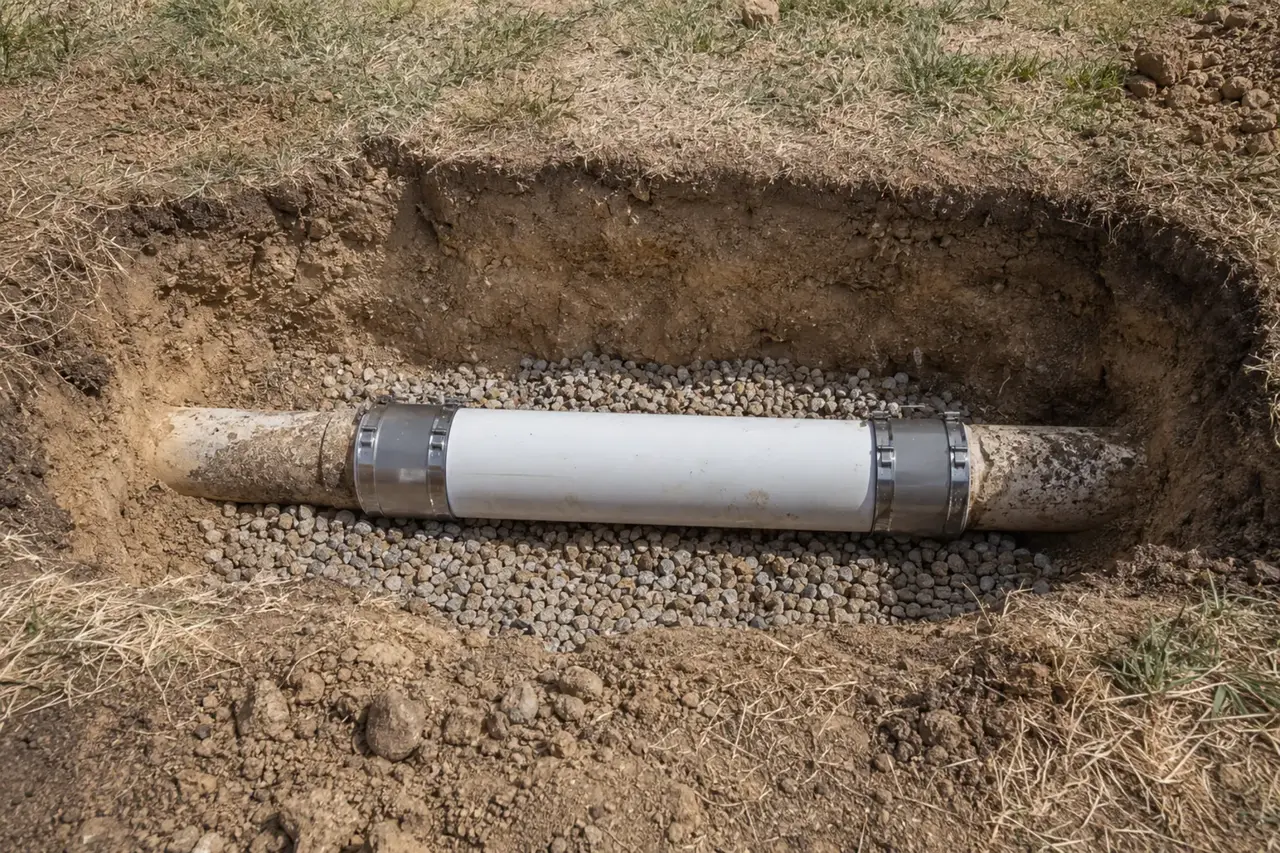
The completed underground work should be checked before backfill hides the repair and surface restoration begins.
What to settle before the excavation crew arrives
Before work begins, confirm access, parking, equipment route, utility marks, plumbing shutdowns, and which surfaces may be disturbed. Move vehicles, unlock gates, identify irrigation or privately installed utilities, and protect pets and occupants from the work area. Confirm where excavated soil and removed pipe will be placed and whether water can be used during the project.
During the work, photograph the exposed defect and the new connections before backfill. Confirm whether the repair extends into sound pipe, whether a cleanout is added, and how slope and support are verified. If the exposed condition differs from the camera image, request an updated explanation and written change before additional work proceeds.
At completion, obtain the final camera recording or inspection record, material and coupling information, permit approval when applicable, restoration notes, invoice, and warranty. Mark the repair location on a property sketch with measurements from permanent features. These records reduce diagnostic time if the lateral needs to be understood later.
- Prepare safe access
- Photograph the open repair
- Approve changes in writing
- Keep final records with the property
Where repair work often overlaps with other trades
A sewer repair request can begin as emergency cleaning, camera inspection, locating, root removal, or a replacement estimate. These are not interchangeable labels. Each service answers a different question: can flow be restored, what condition is visible, where is the defect, and what method corrects it? A coordinated project uses only the steps needed to move from symptom to verified repair.
If the repair exposes broader deterioration, the scope may change from spot repair to partial replacement. If the pipe is suitable and surface restoration is expensive, trenchless options may be compared. Requesting a quote with prior video, marked locations, and cleaning history supports consistent evaluation of the same evidence instead of starting with assumptions.
Material, cracks, joints, offsets, corrosion, roots, and surrounding usable pipe.
Depth, route, utilities, structures, pavement, landscaping, and equipment space.
Testing, backfill, cleanup, restoration, records, exclusions, and warranty.