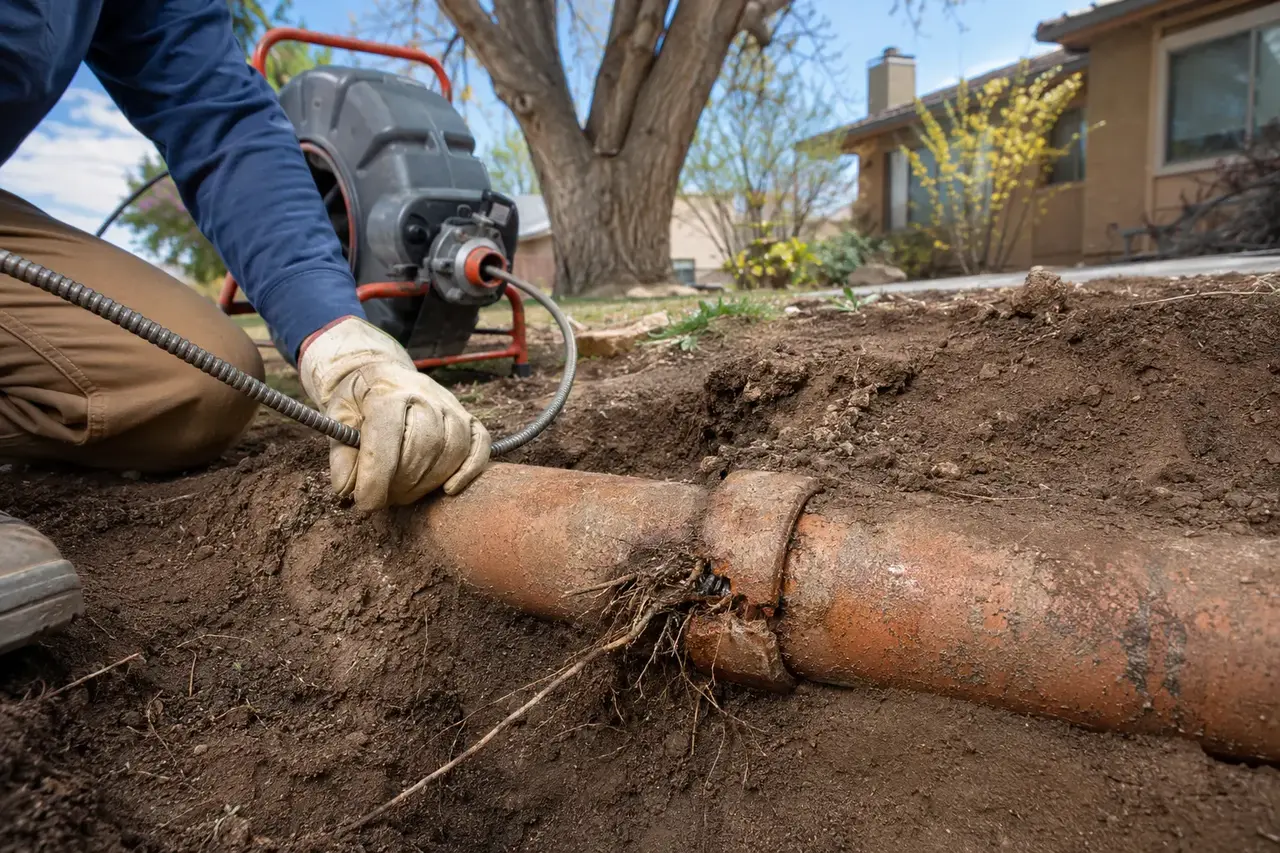
Roots need an opening before they can enter
Roots respond to moisture and can grow through very small openings. Once inside, they collect paper and waste, creating a blockage that may return even after cutting.
A post-cleaning camera inspection can show where roots enter, whether there are several entry points, and whether the pipe remains structurally suitable for a spot repair or lining.
- Recurring seasonal or gradual backups
- Root fragments removed during cleaning
- Visible root masses on camera
- Older jointed pipe near mature landscaping
Manage the recurrence or close the entry point
Scheduled cutting or jetting can manage roots when immediate replacement is not practical. Chemical root treatments may be discussed, but product use must follow label and environmental requirements and does not close the pipe opening.
Structural options can include spot excavation, lining a qualifying pipe, replacing a longer deteriorated section, or rerouting in unusual cases. Tree removal alone does not necessarily eliminate roots already using the pipe pathway.
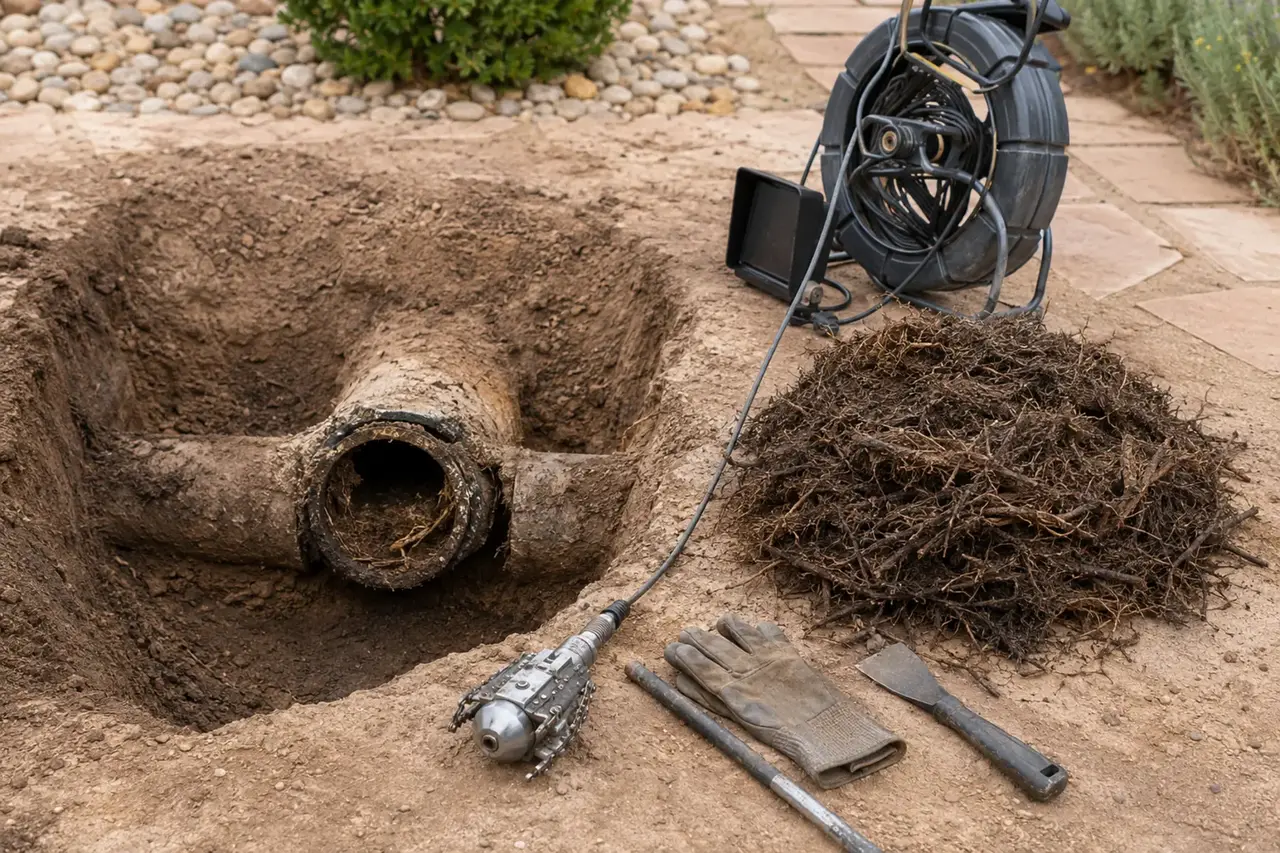
Post-cleaning inspection helps document where roots entered, how much pipe is affected, and whether repair should be considered.
Why roots enter sewer laterals
Roots do not normally penetrate a completely sealed, structurally sound pipe wall. They exploit moisture available through cracked clay, separated joints, failed transitions, deteriorated material, or loose connections. Once fine roots enter, they branch within the nutrient-rich wastewater flow and create a net that catches paper and solids.
Mature trees are not the only source. Shrubs and smaller landscaping can produce significant root systems. The entry location may be far from the trunk, and several plants can contribute. Camera inspection and locating are more useful than guessing which tree is responsible based on surface appearance alone.
Mechanical cutting, jetting, and chemical control
Mechanical cutters can remove dense masses and restore a pathway. Hydro jetting with an appropriate root nozzle can remove remaining material from the wall. Both approaches treat the growth inside the pipe, not the opening that admitted it. Roots can return as long as the defect remains moist and accessible.
Some maintenance programs discuss root-control chemicals. Any product must be legally appropriate, used according to its label, and considered in relation to wastewater-system and environmental requirements. Chemical treatment does not rebuild a separated joint or collapsed pipe and should not substitute for understanding the structural condition.
Root cutting treats the obstruction; inspection shows the condition that allowed entry.
- 01Symptoms
Record which fixtures are affected, when the problem began, and whether it returns.
- 02Access
Identify a usable cleanout or another safe point for the required equipment.
- 03Evidence
Clean, inspect, and locate as needed to document the actual underground condition.
- 04Scope
Match the service method and restoration plan to what the evidence supports.
Repair options after the roots are cleared
A single root-entry joint in otherwise sound pipe may qualify for spot excavation or, in a suitable host line, a sectional or continuous liner. Multiple root-entry points along jointed or deteriorated pipe may favor a longer lining or replacement scope. A severe offset or collapse usually needs excavation before a liner can pass.
Tree removal is not automatically required. Pipe repair may stop wastewater access while preserving the tree. When excavation will cut major structural roots or occur near a valuable tree, an arborist can help evaluate stability and protection. Removing a tree also does not repair the pipe defect or instantly eliminate roots already inside.
Building a root-intrusion maintenance plan
If permanent repair is delayed, schedule maintenance based on documented recurrence rather than waiting for an emergency backup. Keep cleaning dates, camera recordings, root-entry locations, and the distance reached. Shortening intervals can signal faster growth or a worsening opening.
Occupants should know the early warning signs: slower drainage across several fixtures, toilet gurgling, or a repeat backup at the lowest drain. Stop water use during an active main-line backup. A maintenance plan manages risk; it should also state the condition that would trigger structural repair.
- Clear roots sufficiently for inspection
- Locate every visible entry point
- Distinguish maintenance from correction
- Consider trees and excavation together
- Document the trigger for permanent repair
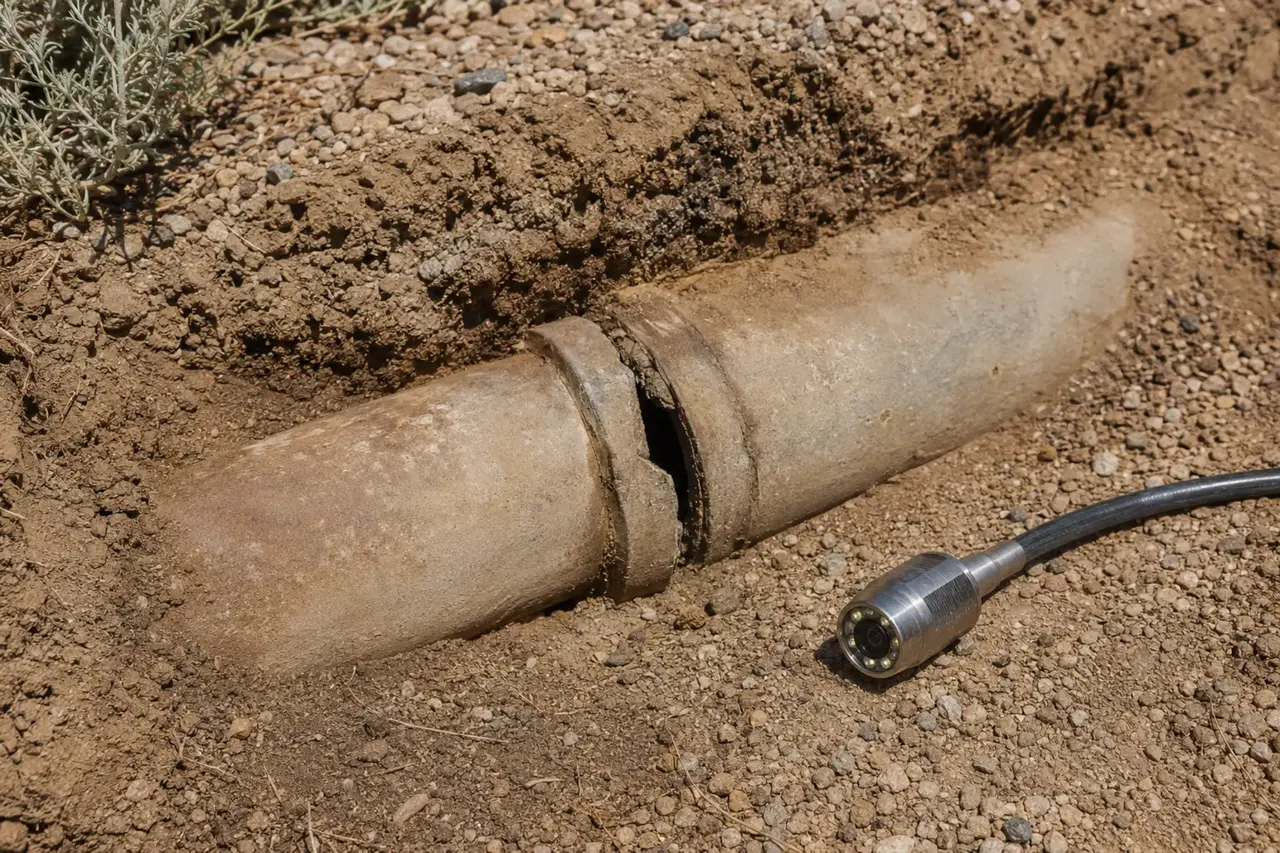
A post-cleaning view can show whether the opening is localized, whether nearby pipe is usable, and whether repair should be considered.
Recurring roots turn maintenance into a long-term cost decision
Compare the annual or semiannual cost of cleaning with the expected cost, disruption, and service life of structural options. Maintenance can be reasonable when the entry is limited, backups are prevented, and replacement is not currently practical. It becomes less attractive when intervals shorten, emergencies continue, or each cleaning risks an increasingly fragile pipe.
A spot repair can correct one entry point without renewing the rest of the line. Lining can seal multiple compatible joints but will not correct severe offsets or slope. Full replacement can address widespread joint failure and grade but creates more excavation. Use the complete camera recording to avoid selecting a method based only on the largest root mass.
Landscaping decisions should be coordinated rather than reactive. If excavation will occur near major roots, consider access, tree stability, and future growth. Keep records showing entry locations and repaired segments so future root growth can be distinguished from already corrected areas.
- Compare recurring maintenance with structural correction
- Review the complete line condition
- Coordinate pipe and tree decisions
- Track every treated entry location
Do not wait for the next overflow to confirm recurrence
Do not rely on a calendar alone. Watch for several fixtures slowing together, toilet-water movement when another fixture drains, gurgling, odor, or a repeat backup at the lowest drain. These changes can mean the root mass or collected debris is again restricting flow sooner than expected.
If symptoms appear, reduce water use and schedule evaluation rather than waiting for complete blockage. A shorter recurrence interval may indicate faster growth, a larger opening, pipe movement, or incomplete previous removal. Update the camera record whenever the condition materially changes so the decision to maintain or repair stays evidence-based.
Material, cracks, joints, offsets, corrosion, roots, and surrounding usable pipe.
Depth, route, utilities, structures, pavement, landscaping, and equipment space.
Testing, backfill, cleanup, restoration, records, exclusions, and warranty.