A concentrated defect can support a concentrated repair
Spot repair is commonly evaluated for a single offset, cracked joint, root entry point, puncture, transition failure, or short collapse. Camera locating helps place the excavation above the defect and estimate depth.
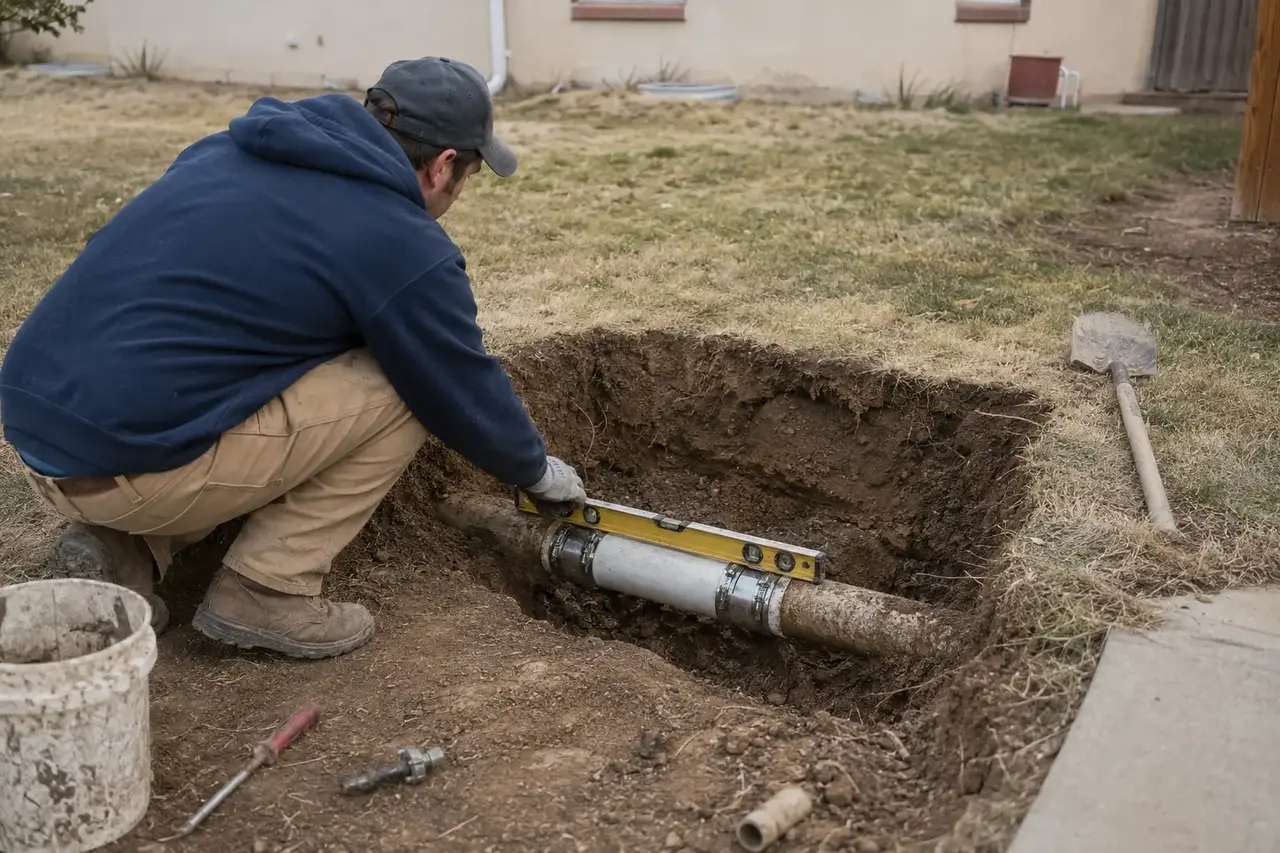
The excavation provides direct access to correct alignment, bedding, connection, and slope at that location. It may be more dependable than lining when a severe offset or collapse prevents liner installation.
- Defect is accurately located
- Damage is limited in length
- Adjacent pipe remains in usable condition
- Excavation area is practical
Check the pipe beyond the excavation
A spot repair does not renew the rest of the lateral. If inspection shows multiple failures, extensive corrosion, widespread deformation, or several root-entry joints, repairing one section may only move the next failure elsewhere.
Excavation dimensions, pipe material, couplings, bedding, inspection, backfill, and restoration should be defined. Change terms for additional damage should be clear before exposure.
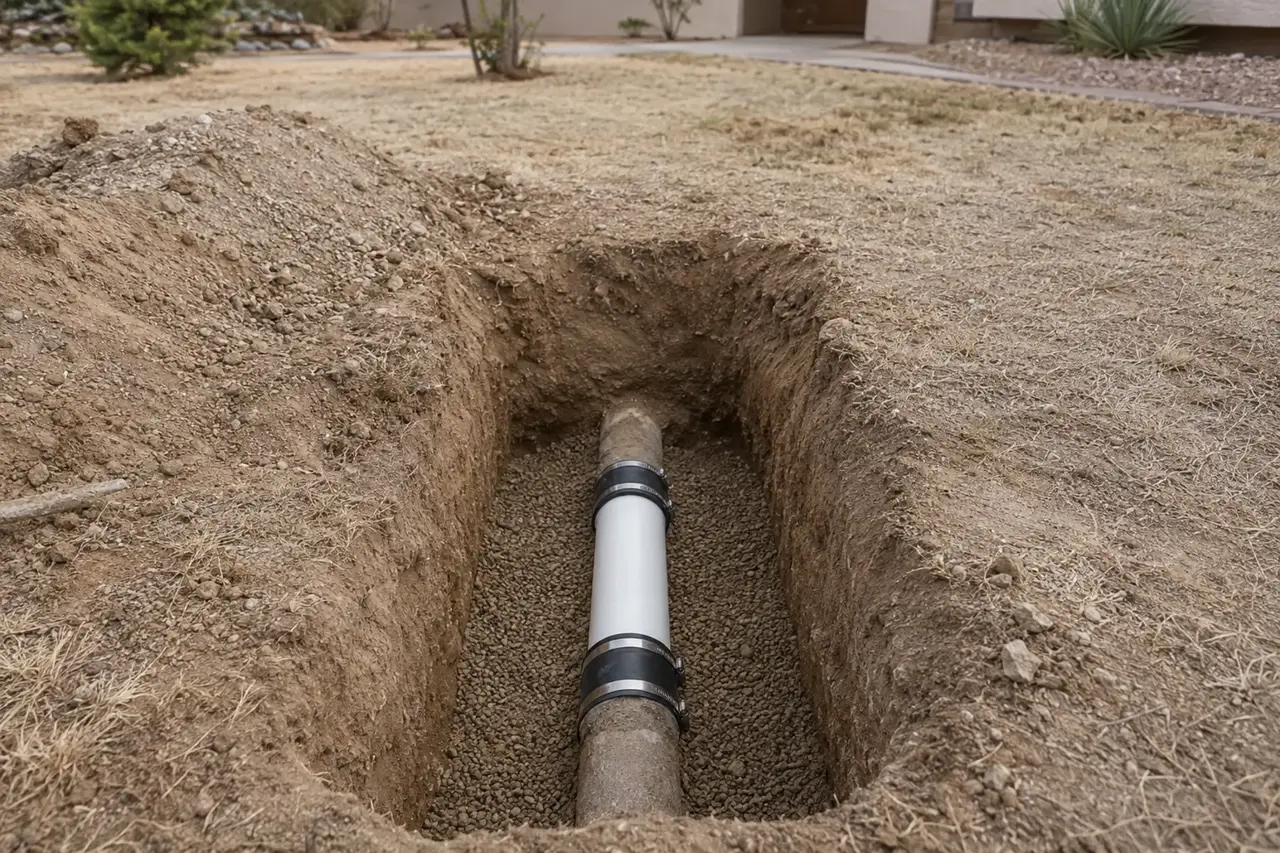
Exposure should confirm the camera finding and establish sound limits, alignment, support, connection quality, and restoration needs.
How a spot-repair location is selected
The camera operator identifies the defect, moves a transmitter to the affected point, and marks the estimated surface location and depth. The recording and locate should agree with the proposed excavation. A second mark at each end of the affected section can help define the expected trench length.
The selected repair must extend beyond unsound material so new connections are made to serviceable pipe. A camera can show the interior but cannot always reveal soil loss or external cracking. Change-order terms should explain how additional damage discovered after exposure will be documented and priced.
Excavation, removal, and reconstruction
After required utility marking and site preparation, the excavation exposes the line with room to evaluate material, support, and adjacent utilities. The failed section is removed, the trench bottom is prepared, and new pipe is installed with compatible transitions, alignment, and drainage. The work may also include a cleanout when access would improve future service.
Depth, soil stability, groundwater, structures, and nearby utilities affect how the excavation is protected and performed. The surface opening may need to be wider than the pipe itself. Spoil handling, equipment access, fencing, traffic control, and occupant safety should be planned before work begins.
A spot repair works best when the defect is limited and surrounding pipe remains usable.
- 01Symptoms
Record which fixtures are affected, when the problem began, and whether it returns.
- 02Access
Identify a usable cleanout or another safe point for the required equipment.
- 03Evidence
Clean, inspect, and locate as needed to document the actual underground condition.
- 04Scope
Match the service method and restoration plan to what the evidence supports.
When a localized repair is not enough
Spot repair makes sense when damage is truly isolated and the remaining lateral is reasonably serviceable. It is less compelling when camera inspection shows several major offsets, widespread corrosion, repeated root-entry joints, long deformation, or incorrect grade across a broad section.
The complete camera recording should be reviewed, not only the worst image. The surrounding condition determines whether one repair provides durable value or merely postpones the next failure a short distance away. A broader liner or replacement can cost more initially while avoiding several separate excavations and restoration projects.
Backfill, restoration, and final records
Before covering the repair, verify connections, slope, support, and any required inspection. Post-repair camera documentation can show the interior transition and confirm flow. Backfill and compaction should support the pipe and reduce future surface settlement.
Restoration may include soil, sod, xeriscape, irrigation, concrete, asphalt, flooring, or fencing. Clarify who performs each item and whether matching existing finishes is included. Keep photographs of the open repair, measurements from permanent landmarks, material specifications, permits, final video, invoice, and warranty.
- Repair extends to sound pipe
- Alignment and support restored
- Final inspection documented
- Backfill and surface scope defined
- Location saved for future reference
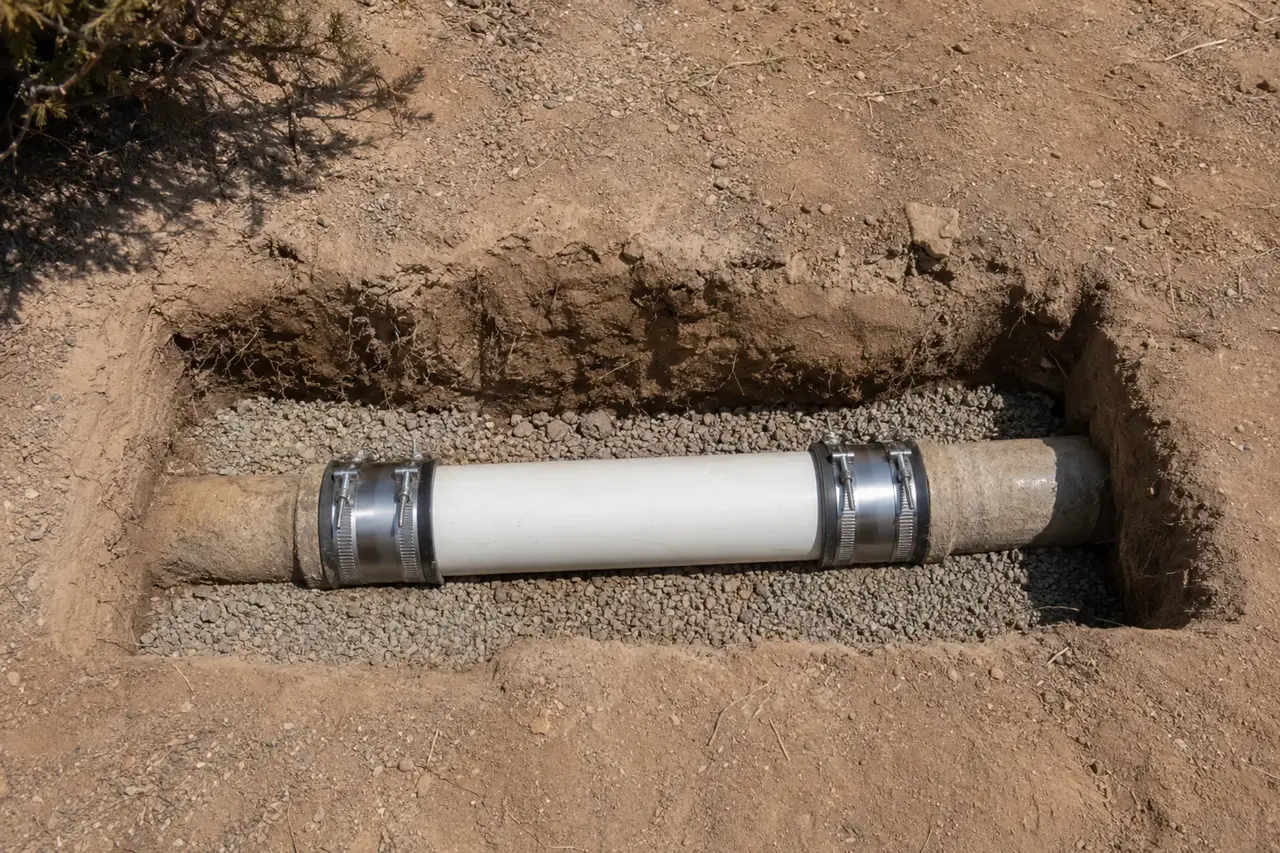
Camera evidence, exposure, connections, alignment, support, testing, and restoration define whether the repair is truly complete.
Comparing a spot repair with a sectional liner
Both approaches can address localized damage, but qualification differs. Excavation directly removes the failed section and can correct alignment, support, and slope over the opened area. A sectional liner seals a compatible interior segment with less surface disturbance but generally follows the existing shape and requires a passable, prepared host pipe.
A severe offset, missing section, active collapse, or localized belly can favor excavation. A crack or joint opening beneath an expensive surface may favor a sectional liner when the surrounding pipe is suitable. The quote should explain which defect characteristic drives the method rather than presenting surface disruption as the only consideration.
Compare access pits, cleaning, preparation, liner length, excavation size, connections, inspection, restoration, and warranty. The comparison should explain how each option affects future camera travel and whether the rest of the lateral remains serviceable. A localized solution is valuable only when it fits both the defect and the broader pipe condition.
- Correct alignment when necessary
- Confirm host-pipe suitability for lining
- Compare complete restoration impact
- Evaluate the remaining lateral
The repaired joint is only one part of the lateral
A post-repair camera should view the new section and as much adjacent line as practical. The final recording should confirm smooth transitions, open flow, and no debris left from construction. If the original camera could not pass the defect, the newly opened route also provides the first chance to inspect the downstream remainder.
That downstream inspection can reveal conditions not included in the original quote. The findings should be documented before the excavation is closed when possible, but avoid automatically expanding work without a documented reason. Additional defects should be located, explained, and priced through the agreed change process.
Material, cracks, joints, offsets, corrosion, roots, and surrounding usable pipe.
Depth, route, utilities, structures, pavement, landscaping, and equipment space.
Testing, backfill, cleanup, restoration, records, exclusions, and warranty.