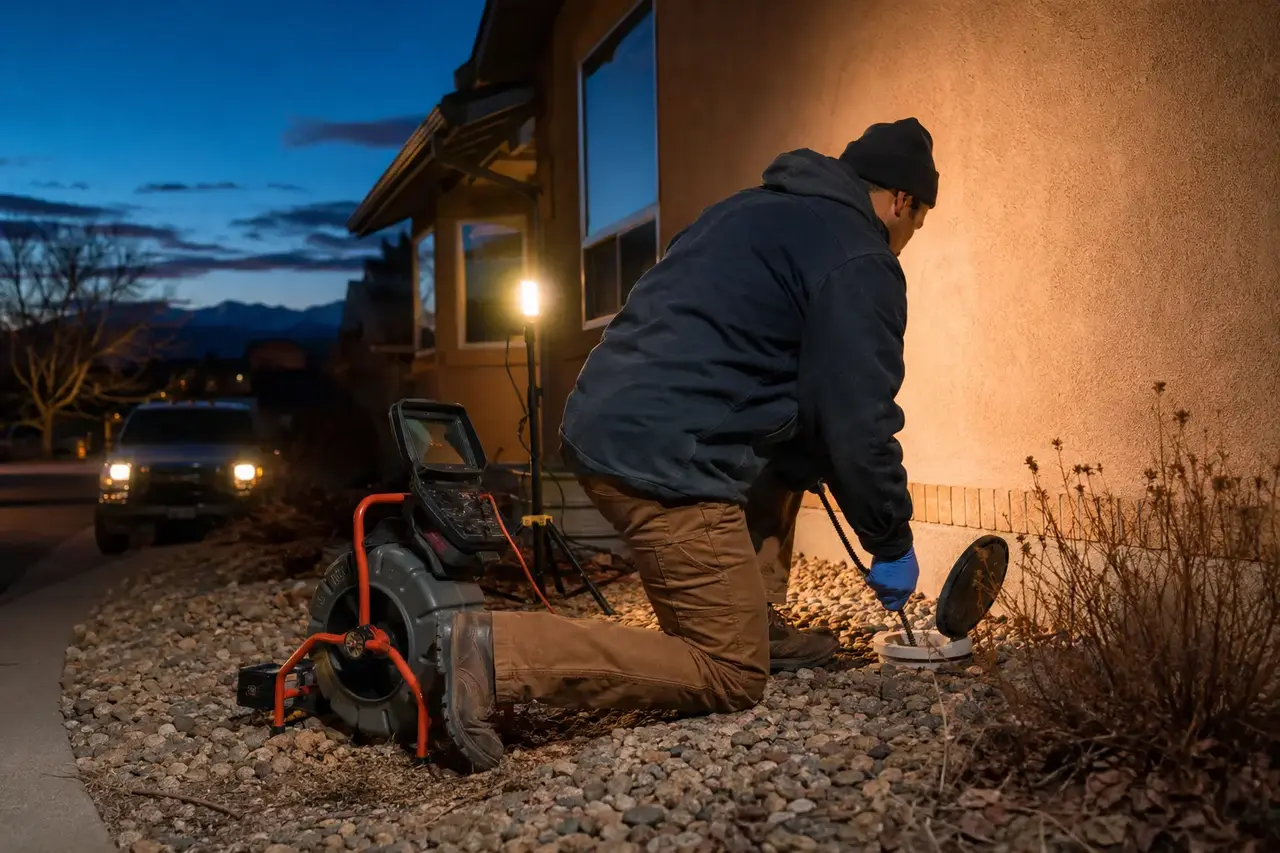
Stop adding water before anything else
Stop flushing toilets, running sinks, using the washing machine, or operating the dishwasher. Keep children and pets away from affected areas and avoid direct contact with wastewater. If electrical equipment or outlets are exposed, leave the area and follow appropriate electrical safety guidance.
Flow may need to be restored before a camera can determine whether roots, debris, a defect, or a collapse caused the event. Cleaning solves an obstruction; it does not repair a structurally damaged pipe.
- Stop all unnecessary water use
- Avoid contact with sewage
- Document visible damage
- Arrange cleaning and follow-up inspection
Before the emergency visit is considered finished
The service record should identify what was removed, where the blockage was located, and whether the camera reached the public connection or septic component. If roots or pipe damage are present, request a repair plan rather than waiting for the next backup.
Contaminated materials may require a separate cleaning or restoration scope. Sewer-line work and indoor remediation should be identified separately before cleanup begins.
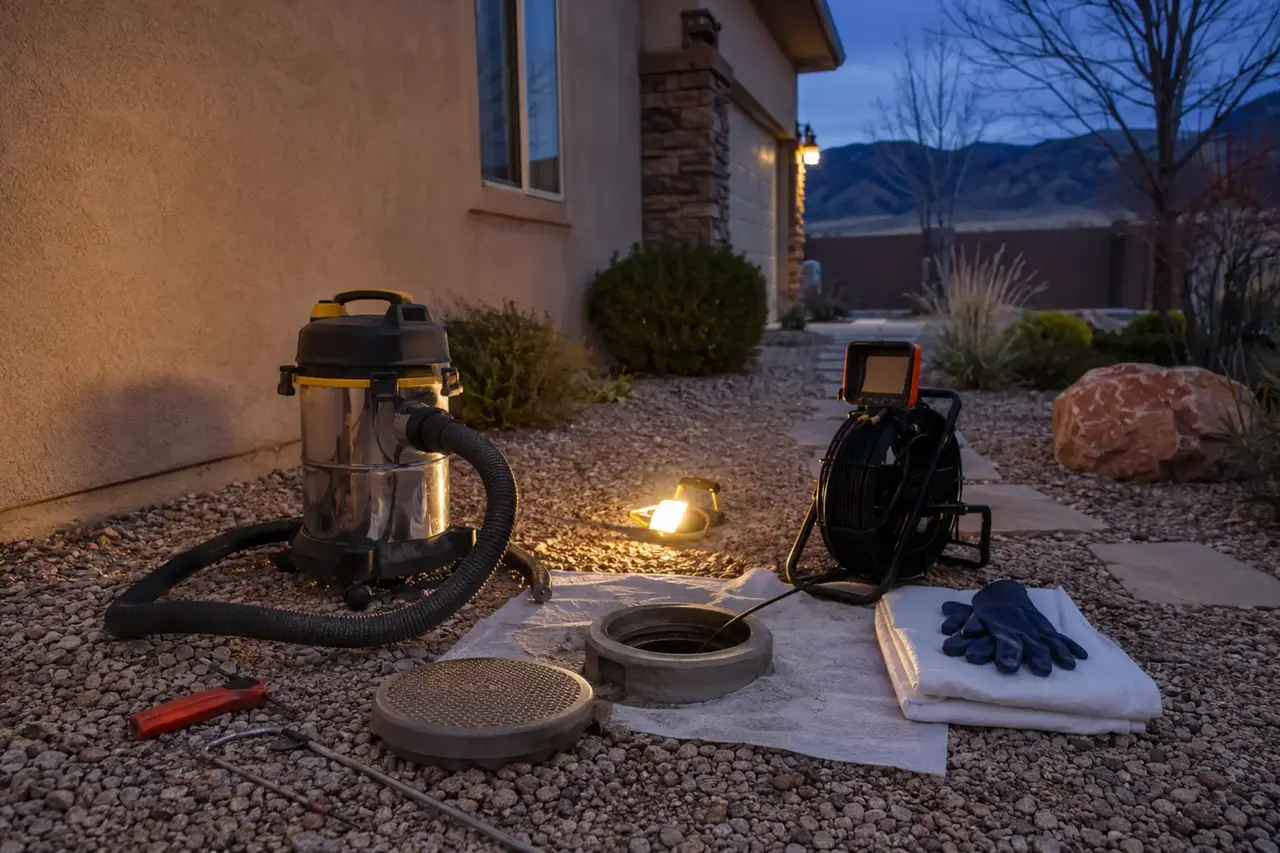
Restoring flow is the immediate goal; identifying what caused the event helps determine whether cleaning, inspection, or repair follows.
Immediate actions during an active sewage backup
Stop flushing toilets, running faucets, using showers, operating the washing machine, and discharging the dishwasher. Water entering the drainage system can appear at the lowest fixture or floor drain and expand the contaminated area. Tell other occupants not to use plumbing until the main line is confirmed open.
Keep children, pets, and unprotected occupants away from wastewater. Avoid direct contact and do not use household electrical equipment in wet areas. If sewage is near outlets, appliances, or an electrical panel, leave the affected space and follow appropriate emergency electrical guidance. Photograph visible damage from a safe location for records and insurance discussions.
How emergency flow is restored
The first service goal is often to open the line with mechanical cable equipment or hydro jetting. The appropriate method depends on access, pipe material, blockage type, and structural condition. The service record should identify what material was removed and whether equipment reached the full accessible run.
Opening the line does not prove the pipe is sound. When roots, repeated blockages, offsets, or pipe fragments are involved, a follow-up camera inspection can identify the underlying condition. A severe blockage may need to be cleared before the camera can travel or see the wall. Emergency cleaning and structural repair can therefore be separate visits or scopes.
Urgent response restores safe use; follow-up evidence explains what should happen next.
- 01Reduce water use
Stop adding flow and keep people away from affected areas.
- 02Restore flow
Use the access and cleaning method suited to the immediate obstruction.
- 03Inspect
Document roots, buildup, damage, or another cause once the line can be viewed.
- 04Prevent recurrence
Choose monitoring, maintenance, repair, or replacement based on the finding.
Cleanup, contamination, and documentation
Indoor sewage can contaminate porous flooring, drywall, insulation, furnishings, and stored items. Sewer-line work stops the source; extraction, disinfection, drying, and material removal are a separate remediation scope. Both scopes should be clearly identified before cleanup begins.
Record the time of the event, fixtures affected, photographs, cleaning method, material removed, camera findings, defect location, and all invoices. If an insurance claim is being considered, contact the carrier promptly to confirm backup coverage, service-line endorsements, mitigation requirements, and documentation. Coverage varies by policy and cause.
Preventing another emergency
After flow is restored, the service record should identify whether the event involved a disposable item, grease, root intrusion, scale, a belly, offset, or structural failure. A one-time obstruction in a sound line may need only behavioral changes. A defect that continually catches waste needs a repair or maintenance strategy.
Keep the camera recording and surface locate. Discuss whether root cutting, scheduled cleaning, spot repair, lining, or replacement is appropriate. If several occupants share the line, provide clear instructions about wipes, grease, and plumbing use. Prevention begins with the actual cause, not a generic cleaning interval.
- Stop water use during the event
- Restore flow safely
- Inspect recurring or root-related problems
- Separate sewer repair from interior cleanup
- Document the cause and next action
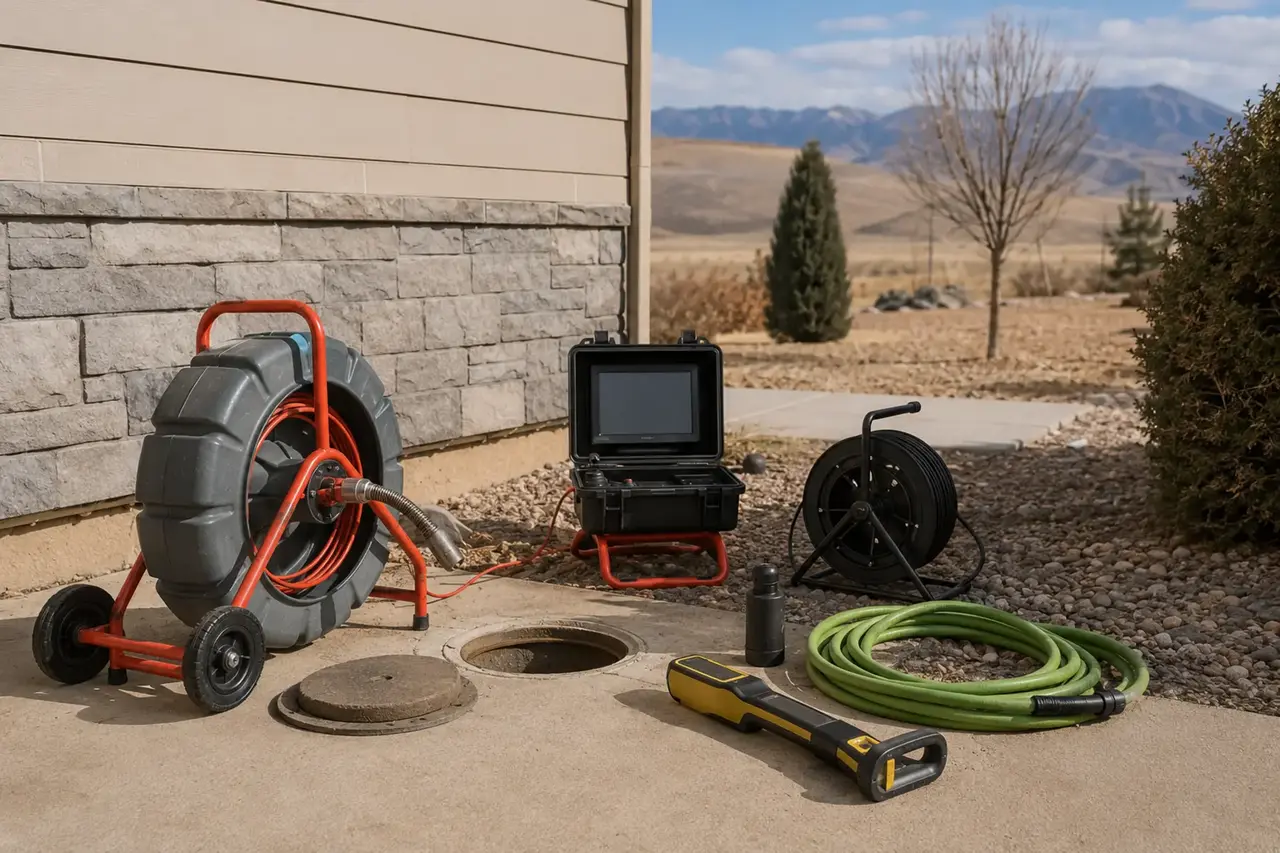
Cleaning records, camera findings, pipe material, and the obstruction location help separate a temporary blockage from structural trouble.
Deciding what happens after the emergency visit
An emergency invoice should record the access point, distance reached, obstruction removed, equipment used, and whether normal flow was restored. The service record should identify whether the cause appears related to disposable material, grease, roots, scale, or structural damage. If the operator could not inspect the line, schedule the camera after conditions permit rather than assuming the problem is resolved.
If the backup involved roots or has happened before, compare the risk of maintenance with the cost and disruption of repair. A known defect may be managed temporarily with scheduled cleaning, but the plan should specify the warning signs and interval. A collapse, severe offset, or active leak generally requires faster structural action.
Review household or tenant practices after the event. Only appropriate wastewater and toilet paper should enter the sanitary system; wipes marketed as flushable can still contribute to clogs. Grease should be managed outside the drain. Cleanouts should remain accessible, and occupants should know to stop water use immediately when the lowest fixtures begin backing up.
- Obtain a written emergency service record
- Schedule camera inspection when warranted
- Choose maintenance or repair based on evidence
- Give occupants a backup-response plan
Some backup conditions extend beyond sewer service
If multiple nearby properties are affected, the suspected problem lies in a public main, or flow cannot be restored through the private lateral, the appropriate sewer utility may need to be contacted. Do not enter a public manhole or attempt work on public infrastructure. The City and property owner can have different maintenance responsibilities.
Indoor contamination, electrical exposure, structural damage, and septic-system failure require their own clearly defined safety or remediation scopes. Sanitation, drying, electrical safety, and insurance documentation should not be assumed to be part of sewer-line work. Clear scopes prevent important work from being overlooked.
Material, cracks, joints, offsets, corrosion, roots, and surrounding usable pipe.
Depth, route, utilities, structures, pavement, landscaping, and equipment space.
Testing, backfill, cleanup, restoration, records, exclusions, and warranty.