One slow sink or tub
Usually begin with the affected fixture or branch drain. A main sewer problem is less likely when every other fixture drains normally.
 Pueblo Sewer Line Repair
Complete service options
Compare diagnosis, cleaning, repair, replacement, and access work. The correct starting point depends on the symptoms and what is already known about the pipe.
Find the problem
Inspection and locating services establish what is happening, where it is happening, and whether the pipe is structurally damaged.
Restore flow
Cleaning can remove an obstruction and restore flow. It does not repair a broken pipe, so recurring problems should be inspected.
Clear common obstructions using mechanical cleaning methods selected for the line.
View service detailsUse controlled high-pressure water to remove grease, sludge, scale, and some root growth.
View service detailsCut or jet root masses, then determine where roots entered and whether repair is needed.
View service detailsTake immediate steps to limit wastewater damage and restore safe drainage.
View service detailsRepair the pipe
Repair methods should match the location, length, severity, and cause of the defect—not simply the most familiar method.
Repair isolated cracks, separated joints, offsets, or damaged pipe sections.
View service detailsExpose and replace a localized failed section when targeted excavation is practical.
View service detailsEvaluate lining or pipe bursting when the defect and existing alignment qualify.
View service detailsAdd accessible entry for cleaning, inspection, and future maintenance.
View service detailsReplace or upgrade
Widespread deterioration, collapse, repeated failures, or an unsuitable line configuration can make partial or full replacement the better long-term choice.
Plan partial or full replacement with clear excavation, pipe, connection, and restoration scope.
View service detailsAddress higher-use lines, grease exposure, tenant impacts, access, and operational scheduling.
View service detailsCoordinate a new private sewer service from approved connection and elevations through testing and as-built records.
View service details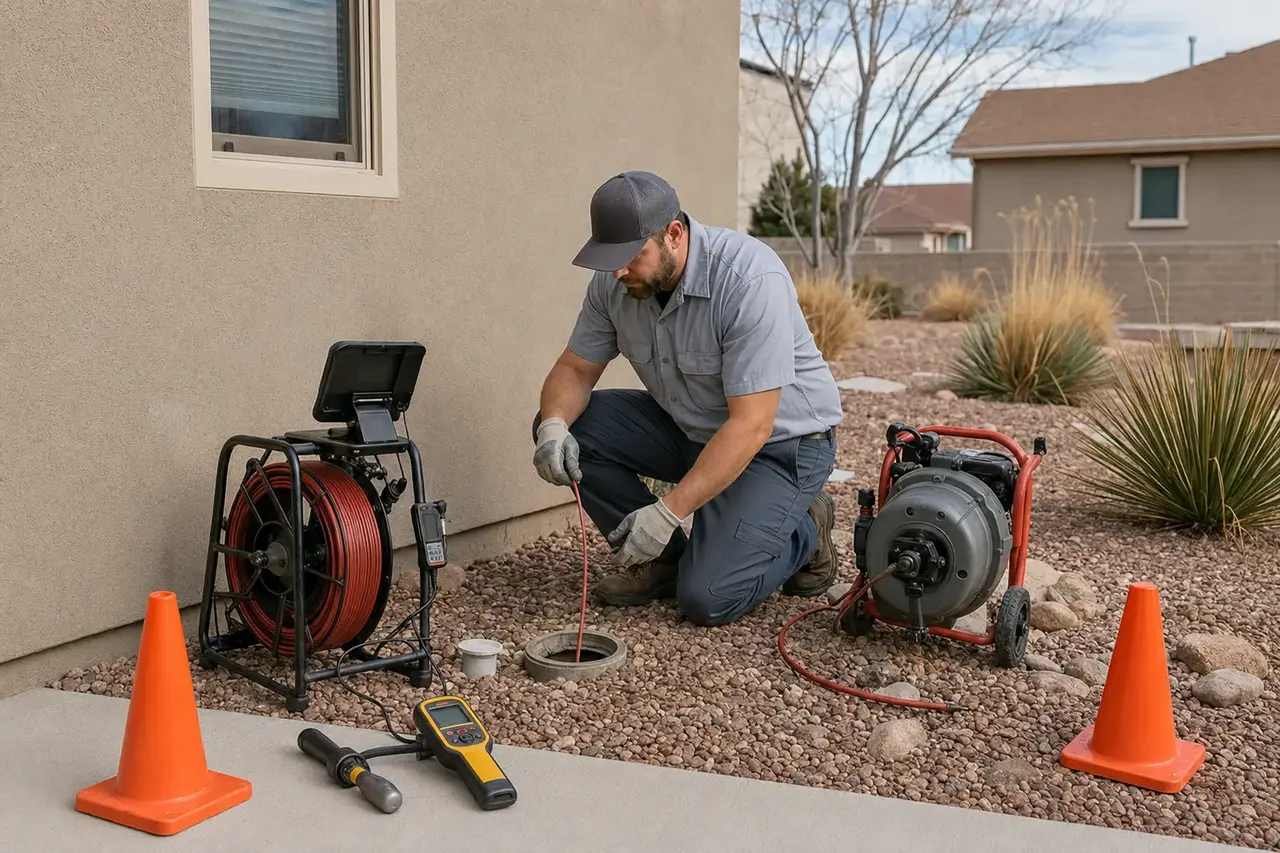
Camera inspection, locating, and cleaning each answer a different question before repair work begins.
Symptoms and starting points
Symptoms do not prove the cause, but they help determine whether to begin with a fixture, main-line cleaning, camera inspection, or urgent repair evaluation.
Usually begin with the affected fixture or branch drain. A main sewer problem is less likely when every other fixture drains normally.
Stop water use. Multiple fixtures—especially the lowest drain—can indicate a main building-sewer obstruction.
Cleaning may be treating the symptom. A camera inspection can look for roots, offsets, a belly, corrosion, or damaged pipe.
Root cutting can restore flow, but roots normally enter through an opening. The entry point and recurrence plan should be identified.
Standing water may indicate a belly, obstruction, poor slope, or downstream restriction. The length and depth of the low area matter.
A camera may not pass through a full collapse. Locating and excavation can be required to expose and replace the failed section.
Limit use of the plumbing system and keep people away. A leaking lateral, septic problem, or overflow requires prompt evaluation.
A sewer scope can reveal buried conditions that are outside the usual visual home inspection.
Begin with the approved wastewater connection, civil and plumbing elevations, route, cleanouts, utility conflicts, permits, testing, and site sequence.
Before work begins
Review the full repair sequence, major price factors, and how Pueblo private laterals connect to the public system.
Important distinction
A cable or jet can remove an obstruction, but it cannot close a crack, realign a separated joint, correct a belly, or rebuild a collapsed section. When a blockage returns, the condition that allowed it to form must be identified.
Start with the symptoms