Choose the tool for what is blocking the line
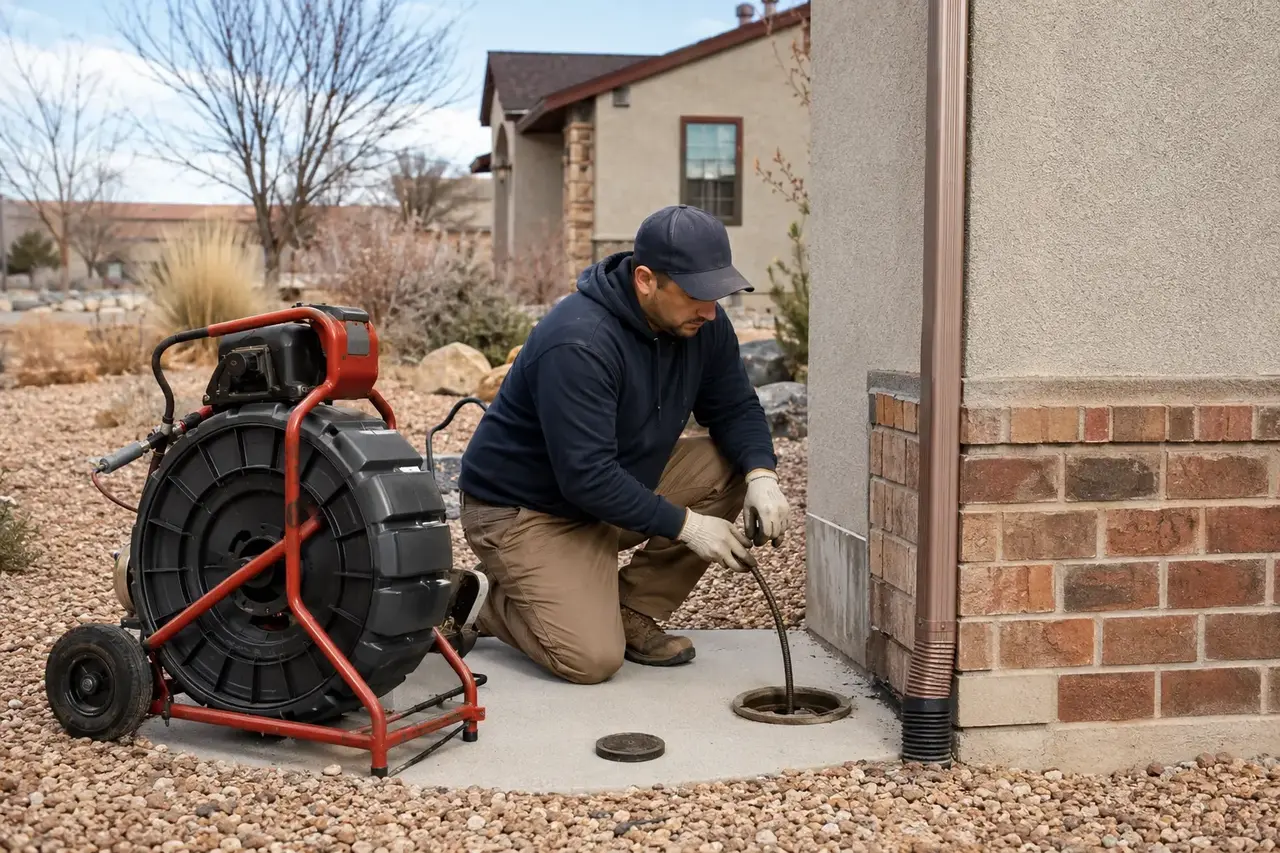
Mechanical cable machines rotate cutting or retrieving tools through the line. Different heads may be used for soft blockages, roots, scale, or retrieval. Hydro jetting uses controlled high-pressure water with specialized nozzles to scour material and move debris downstream.
Cleaning is often the first step during a backup because it restores flow. It is also preparation for a camera inspection when the lens cannot pass or the pipe wall is hidden.
- Identify the available cleanout
- Consider pipe material and condition
- Match the tool to the obstruction
- Inspect after cleaning when problems recur
Flow can return while the defect remains
A line can flow after cleaning and still contain a crack, separated joint, root opening, belly, or partial collapse. If the obstruction returns quickly or the cleaning tool repeatedly catches at one location, further inspection is important.
The service record should state how much of the line was reached, what material was removed, whether the pipe was viewed afterward, and whether maintenance or structural repair is recommended.
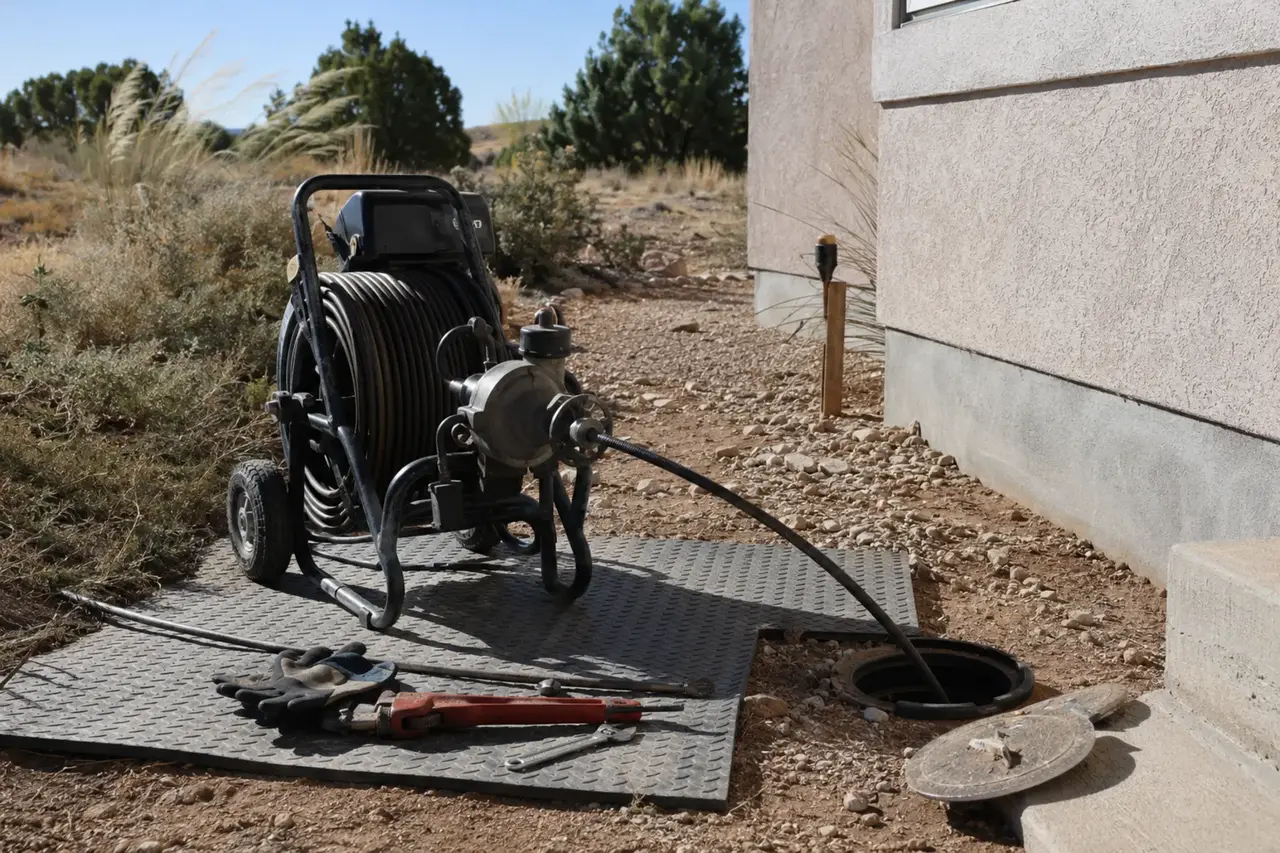
A successful cleaning creates access for inspection and helps reveal whether the blockage was temporary or connected to a structural problem.
Mechanical sewer cleaning methods
Cable machines rotate tools through a cleanout to cut, bore, retrieve, or break apart obstructions. A small penetrating head can open initial flow, while larger cutting heads can address roots or buildup after the condition is understood. The operator should avoid using a tool that is too aggressive for fragile, deformed, or badly corroded pipe.
The distance reached and material returned provide diagnostic clues. Grease, wipes, roots, mineral scale, soil, and pipe fragments point to different conditions. If the cable repeatedly stops at the same distance, a camera and locate can determine whether an offset, collapse, trap, or difficult bend is involved.
Cleaning versus hydro jetting
Hydro jetting uses water flow and specialized nozzles to scour the pipe wall and move debris. It can be especially useful for grease, sludge, fine roots, and broad wall buildup. Mechanical cabling may be better for initial penetration, retrieving objects, or working where water volume and containment are concerns.
Neither method is automatically superior. Pipe material, diameter, access, blockage, downstream capacity, and structural condition determine the choice. In some cases, cabling restores flow, a camera identifies remaining buildup, and jetting provides more complete cleaning before a final inspection or liner installation.
The goal is usable flow plus enough access to understand why the blockage occurred.
- 01Symptoms
Record which fixtures are affected, when the problem began, and whether it returns.
- 02Access
Identify a usable cleanout or another safe point for the required equipment.
- 03Evidence
Clean, inspect, and locate as needed to document the actual underground condition.
- 04Scope
Match the service method and restoration plan to what the evidence supports.
Why recurring clogs need inspection
A blockage that returns shortly after cleaning may form at a root opening, offset, low spot, rough corroded surface, or deformed section. Repeating the same cleaning can restore flow temporarily without changing the condition that collects debris.
A post-cleaning camera inspection should look for the catch point and document the rest of the lateral. If the pipe is sound, a maintenance plan or changes in use may be enough. If the pipe is structurally damaged, spot repair, lining, and replacement can be compared against the actual evidence.
Maintenance planning for homes and businesses
Residential lines normally should not require frequent cleaning when they are sound and used appropriately. Known root intrusion or a defect awaiting repair may justify scheduled service. Commercial kitchens, multifamily buildings, and other high-use properties can have different loading and may benefit from documented preventive maintenance.
Keep a record of cleaning dates, equipment used, distance reached, material removed, camera results, and recommendations. Maintenance should be adjusted when evidence changes. A line that suddenly needs more frequent service may be deteriorating or receiving different waste, and that change deserves investigation.
- Use an adequate cleanout
- Record material removed
- Inspect after severe or recurring clogs
- Match maintenance frequency to evidence
- Do not treat cleaning as structural repair
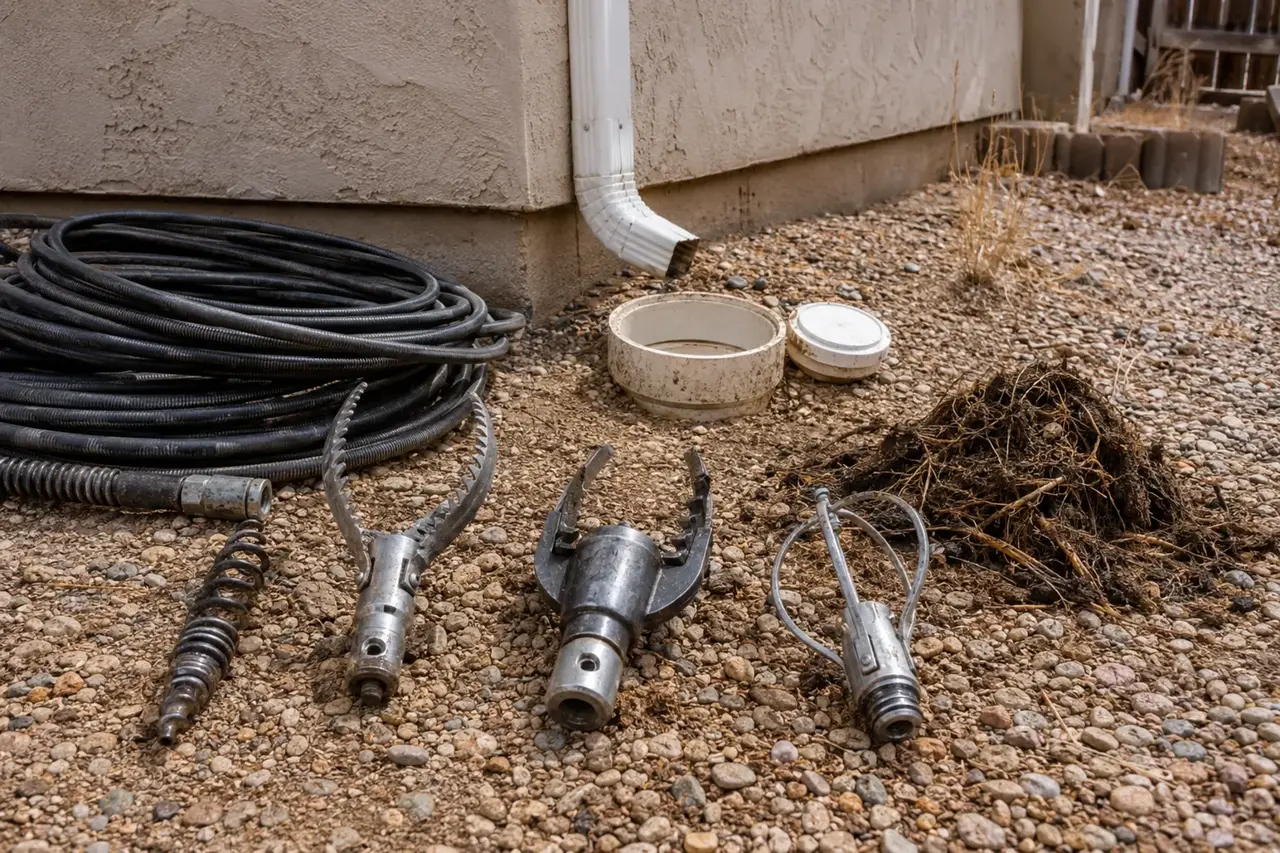
What comes back from the line—and what the camera shows afterward—helps explain whether cleaning alone addressed the problem.
Keep a record that makes the next visit more useful
The record should identify the cleanout used, direction of service, approximate pipe size, distance reached, tools or nozzles used, and material removed. If the line could not be fully traversed, note the stopping distance and suspected reason. This information becomes more useful when compared with previous service calls.
When a camera follows cleaning, retain both the video and the written interpretation. Note whether the public connection or septic destination was reached and whether wall buildup, roots, offsets, standing water, or damage remains. A clean appearance near the access point does not prove the entire lateral was cleaned.
If future maintenance is recommended, the interval should reflect observed accumulation and operational consequences. The recommendation should state what would change the interval and which finding would trigger repair. A documented plan is more defensible than automatic annual service when no condition or use pattern supports it.
- Record equipment and distance
- Identify the removed material
- Inspect the complete accessible line
- Base maintenance on actual recurrence
What goes down the drain affects how long cleaning lasts
Cleaning provides a fresh opportunity to reduce avoidable buildup. Keep wipes, hygiene products, paper towels, rags, litter, and construction material out of toilets and drains. Manage cooking grease outside the plumbing system rather than relying on hot water to carry it away. Commercial properties should maintain interceptors and train staff on approved disposal procedures.
Behavioral changes cannot stop root entry, corrosion, or poor slope, but they can reduce the solids that catch at a defect. When a line contains a known issue awaiting repair, careful use and prompt response to slower drainage can reduce emergency risk. Occupants should know the cleanout location and the instruction to stop water use during a main-line backup.
Material, cracks, joints, offsets, corrosion, roots, and surrounding usable pipe.
Depth, route, utilities, structures, pavement, landscaping, and equipment space.
Testing, backfill, cleanup, restoration, records, exclusions, and warranty.