What the camera can—and cannot—show
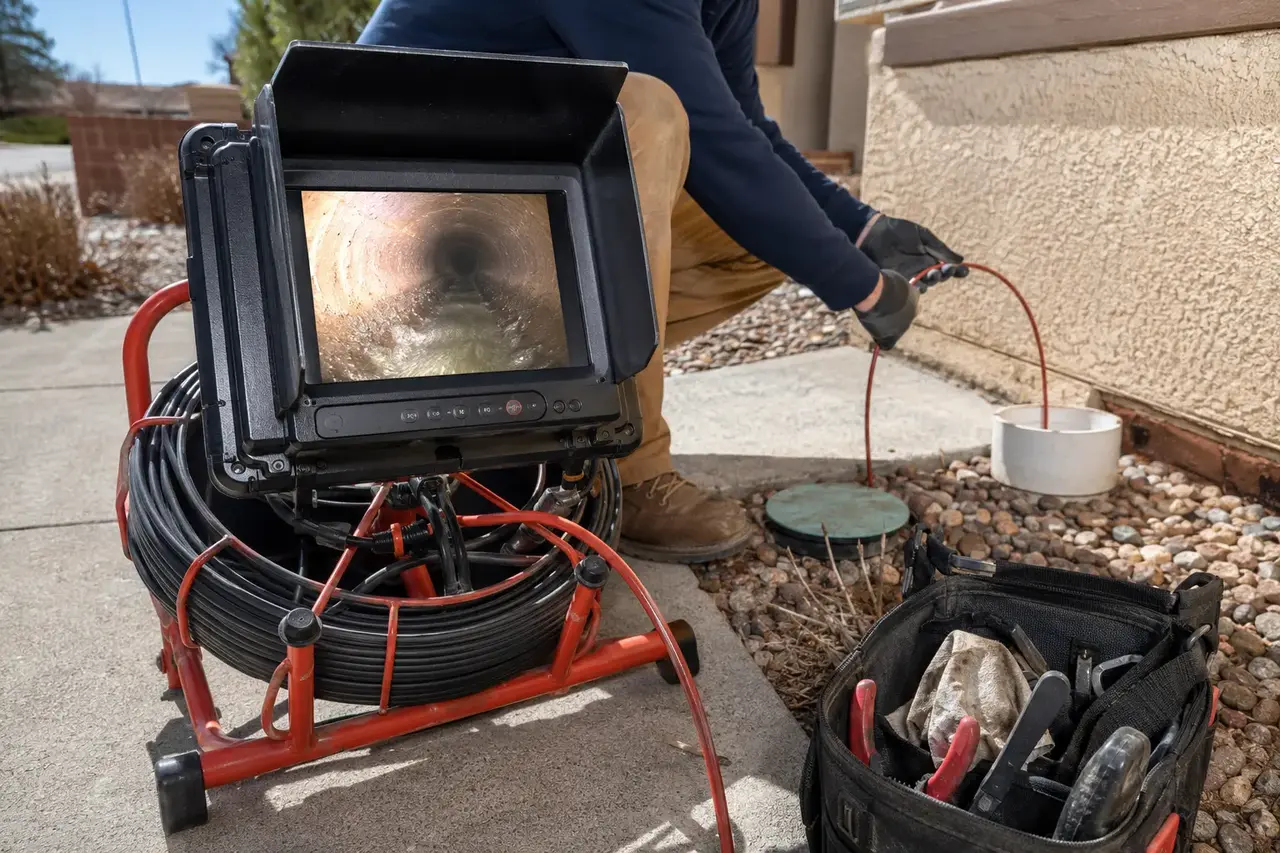
The camera may show grease or debris, root intrusion, separated joints, cracks, corrosion, standing water, foreign objects, or a collapsed section. A locator can mark the camera head above ground and estimate depth, helping define where excavation would occur.
A camera cannot always travel through a completely blocked or collapsed pipe. Cleaning may be needed first, and standing water can hide portions of the pipe wall.
- Recurring or unexplained backups
- Pre-purchase sewer evaluation
- Planning a repair or replacement
- Checking the line after cleaning
Turn the recording into a usable repair plan
The recording or clear images should identify where the defect sits relative to the building and public connection, its estimated depth, how much of the line was viewed, and whether the proposed repair addresses the cause rather than only the symptom.
Sewer video interpretation requires context. A small joint transition may be normal, while standing water, heavy root growth, a large offset, or visible collapse can be more significant.
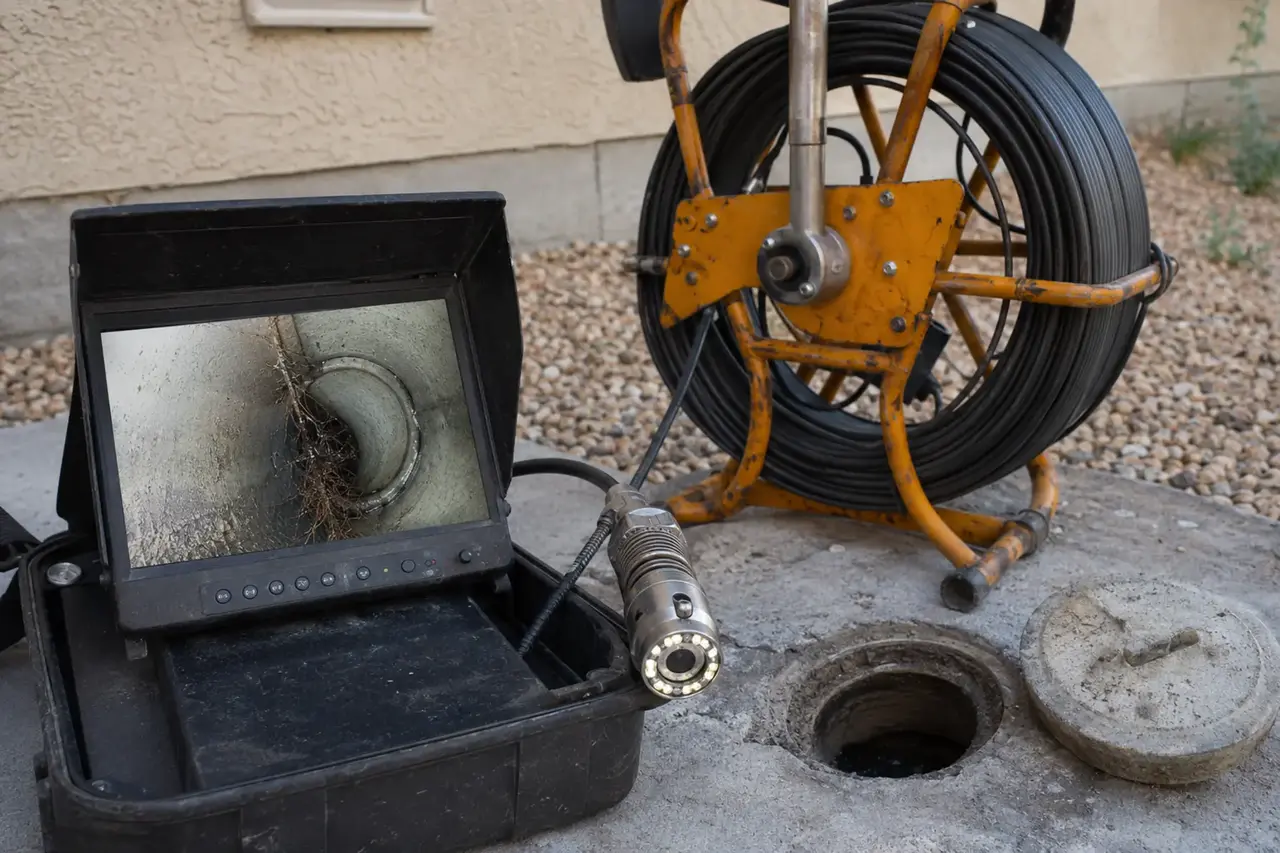
A clear recording becomes more actionable when it is paired with access notes, surface locating, and the surrounding pipe condition.
How a sewer camera inspection is performed
A waterproof camera is pushed through a cleanout or other approved access while the operator watches the image and tracks cable distance. The lens needs flowing space and reasonable visibility. A heavy blockage, dense roots, severe standing water, or collapse can prevent travel or hide the wall, so cleaning may be required before the inspection can answer structural questions.
The operator should note where the camera enters, which direction it travels, pipe material, diameter changes, branches, transitions, and the point where the inspection ends. Distance counters are useful but should be paired with surface locating when a repair is planned. Cable distance is not always the same as a straight surface measurement because the route can turn or change elevation.
Reading common camera findings
Roots appear as fine tendrils, thicker masses, or dense obstructions entering through joints or damaged areas. An offset occurs when adjoining sections no longer align. Standing water can indicate a low spot, downstream restriction, or poor grade. Cracks, holes, deformation, missing pipe, corrosion, mineral scale, grease, and construction debris each suggest different next steps.
Not every visible joint or minor imperfection requires excavation. The significance depends on opening size, flow restriction, soil entry, recurrence, pipe material, and the condition of the rest of the lateral. A single still image can exaggerate or understate the issue, which is why the full video, distance, and context matter.
Video becomes more valuable when access, distance, condition, and surface location agree.
- 01Symptoms
Record which fixtures are affected, when the problem began, and whether it returns.
- 02Access
Identify a usable cleanout or another safe point for the required equipment.
- 03Evidence
Clean, inspect, and locate as needed to document the actual underground condition.
- 04Scope
Match the service method and restoration plan to what the evidence supports.
Camera inspection for property purchases and recurring clogs
A standard home inspection does not normally reveal the inside of a buried sewer lateral. A pre-purchase scope can identify material, major defects, root entry, standing water, and whether the camera reached the connection. Buyers should receive the recording and a clear explanation of limitations, especially if the line was not cleaned first or the camera could not pass an obstruction.
For a recurring clog, inspection is most informative after the blockage is removed. The camera can determine whether the event resulted from misuse or buildup in an otherwise serviceable line, or whether roots, offsets, deterioration, or poor slope create a recurring catch point. That distinction changes whether maintenance or structural work is the appropriate recommendation.
Leave the inspection with evidence that supports the next decision
The inspection record should state whether the complete accessible lateral was viewed, how the public connection or septic destination was identified, where each defect is located, its estimated depth, the pipe material, and whether standing water prevented a full view. The recording should accompany the summary, with exact footage supporting any recommended repair.
A camera cannot directly verify every leak, measure pipe-wall thickness, see through opaque wastewater, or determine soil conditions outside the pipe. It also cannot guarantee future performance. Additional locating, cleaning, pressure or dye testing, excavation, or engineering review may be needed for unusual conditions. A good inspection states both findings and limitations.
- Receive video or clear images
- Mark location and estimated depth
- Note access and distance reached
- Separate observation from recommendation
- Document inspection limitations
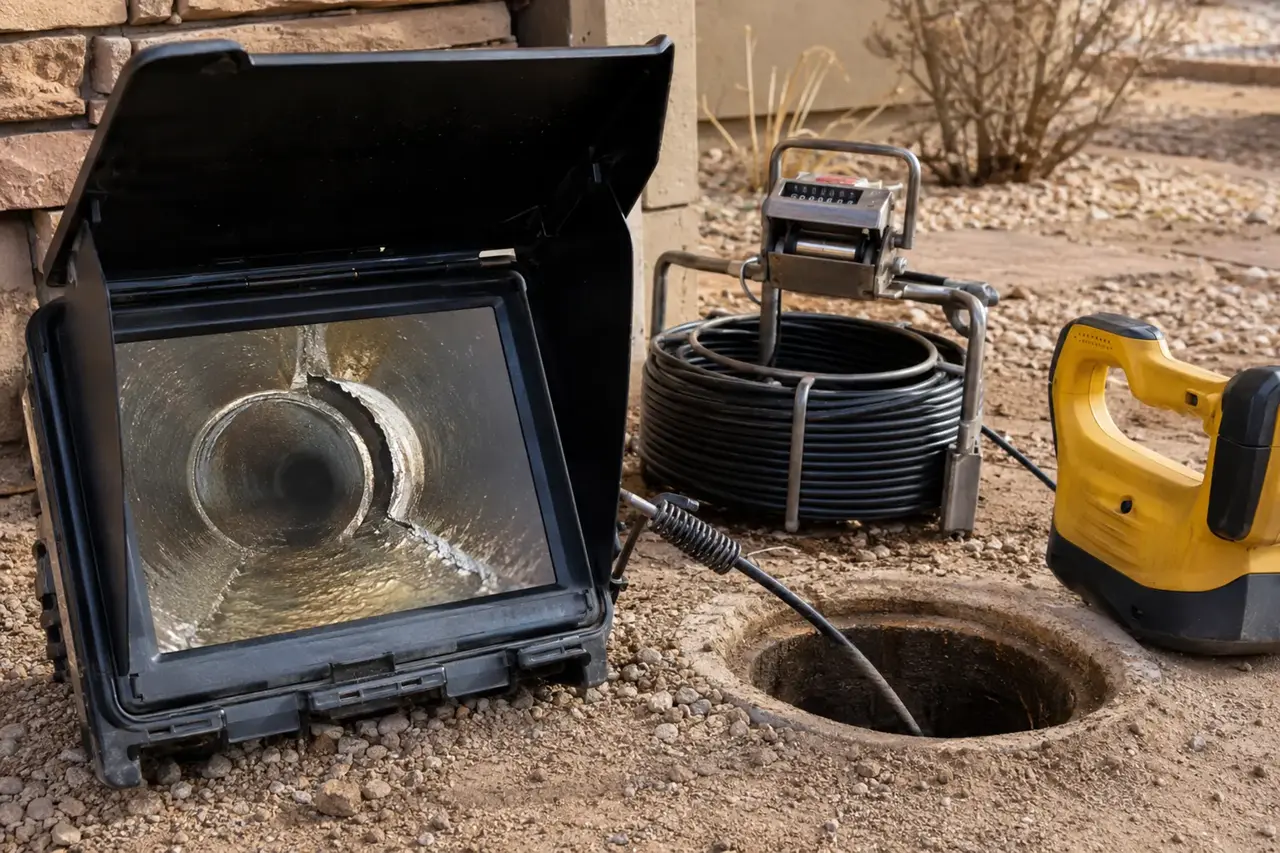
Clear documentation helps distinguish a condition to monitor from a defect that needs cleaning, repair, or replacement planning.
An inspection report should support the next decision
A useful report should state the property and access point, date, direction of travel, pipe material and diameter, distance reached, reason the inspection ended, and each significant observation with footage or distance. If the line changes material or size, that transition should be noted because it may represent an older repair or a potential catch point.
Defects intended for repair should be located at the surface and tied to recognizable property features. Approximate depth should be included, with a note that electronic depth is an estimate. If a quote depends on the mark, the proposal should explain how unexpected depth, route, or additional damage will be handled after excavation.
The report should distinguish facts from recommendations. 'Roots visible at 42 feet' is an observation; 'replace the entire lateral' is a recommendation that should be supported by the condition of the full line. Keeping the complete video preserves the evidence and helps the property owner compare scopes.
- Document access and distance
- Identify all material transitions
- Locate repair-worthy defects
- Separate observations from recommendations
Use the same camera findings when comparing estimates
Use the same recording and locate information for every estimate. Scopes cannot be compared fairly when they rely on different evidence. Each estimate should identify the footage supporting the recommendation and state whether the method corrects structure, restores flow, or manages recurrence.
If interpretations differ, focus on observable facts: pipe material, distance, location, depth, standing water, opening size, and whether the camera reached the end. A second opinion can be useful when one recommendation calls for extensive replacement and another says no structural work is needed. The goal is not the most reassuring answer; it is a scope supported by complete evidence.
The line is open and clean enough to see joints, walls, standing water, and obstructions.
On-screen distance is paired with the access point and surface locating where needed.
The recording shows the approach, the defect, and surrounding pipe—not only a single still frame.