Start with the symptoms
The affected fixtures, timing, previous backups, cleaning history, and camera findings help determine whether the request begins with cleaning, inspection, locating, or structural repair.
 Pueblo Sewer Line Repair
About Pueblo Sewer Line Repair
Pueblo Sewer Line Repair gives residential and commercial property owners a dependable place to turn when an underground problem calls for inspection, cleaning, repair, or replacement.
How the work comes together
Follow the sequence from the first symptom through inspection, locating, method selection, permits, repair, testing, backfill, and surface restoration. The guide explains what a complete project should include and where important decisions are made.
What to expect
Because the pipe is underground, the cause cannot be confirmed from a symptom alone. A practical service process narrows the problem before structural work is selected.
The affected fixtures, timing, previous backups, cleaning history, and camera findings help determine whether the request begins with cleaning, inspection, locating, or structural repair.
Sewer-line recommendations should be supported by usable access, camera evidence, defect location, pipe material, depth, and the condition of the surrounding line.
Spot excavation, lining, pipe bursting, partial replacement, and full replacement solve different conditions. The method should follow the diagnosis.
A useful estimate addresses pipe limits, access, permits, testing, backfill, restoration, exclusions, timing, price, and warranty—not only the underground material.
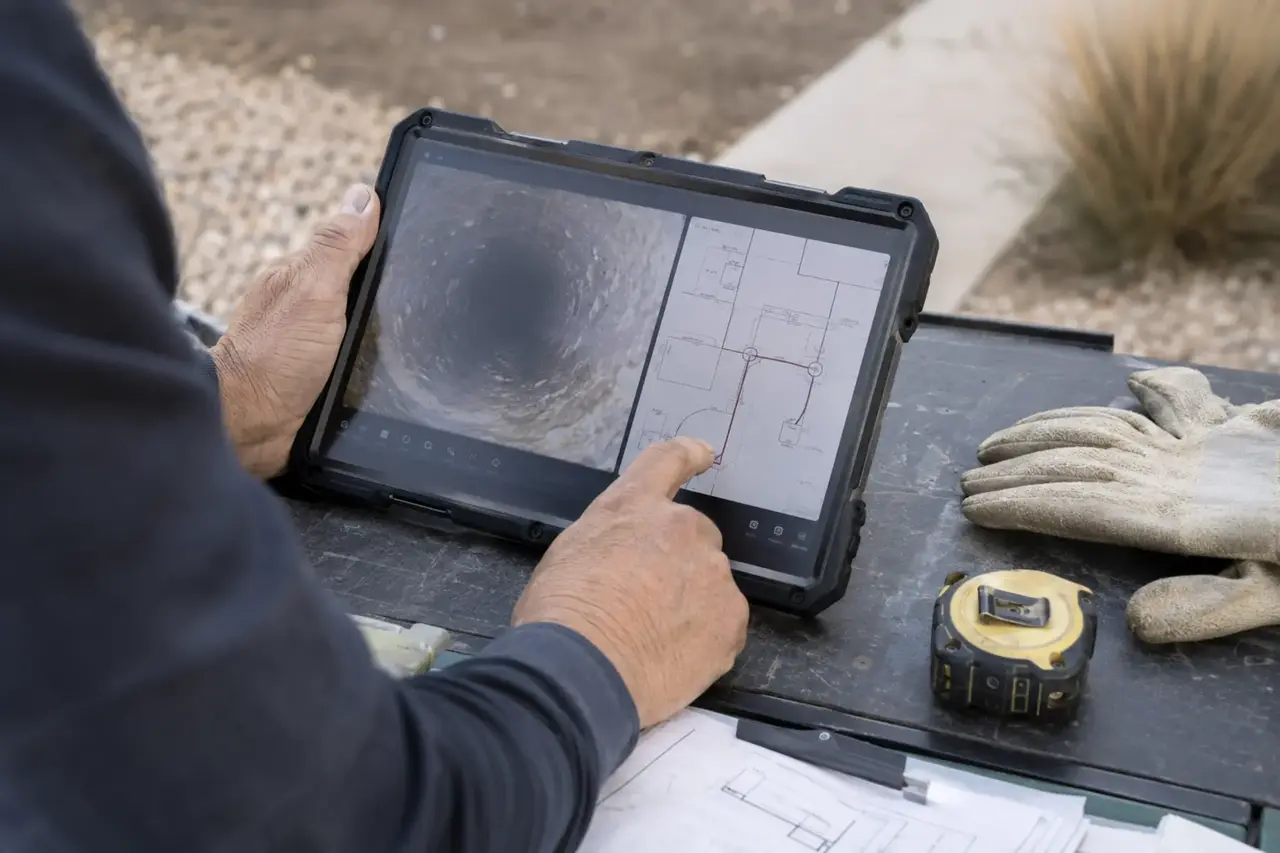
Pipe condition, route, depth, access, and surrounding surfaces all help determine which option makes sense.
Each stage should reduce uncertainty before buried structural work is selected.
Document the fixtures, timing, history, prior cleaning, and known camera findings.
Establish usable access and restore enough flow to inspect the system safely.
Use camera evidence, distance, locating, material, depth, and site conditions.
Choose cleaning, repair, trenchless work, or replacement from the confirmed condition.
Service focus
Requests may involve a current sewer backup, recurring main-line clogs, tree-root intrusion, a camera-documented defect, a failed cleanout, damaged underground pipe, a replacement estimate, or a new private sewer connection for a construction project. Residential and commercial properties can require different equipment, scheduling, access, and restoration planning.
The first step depends on what is already known. An existing blocked line may need cleaning before it can be viewed. A visible camera defect may need locating before it can be priced. New construction instead begins with approved connection information, elevations, site coordination, permits, testing, and a protected route that can be maintained after turnover.
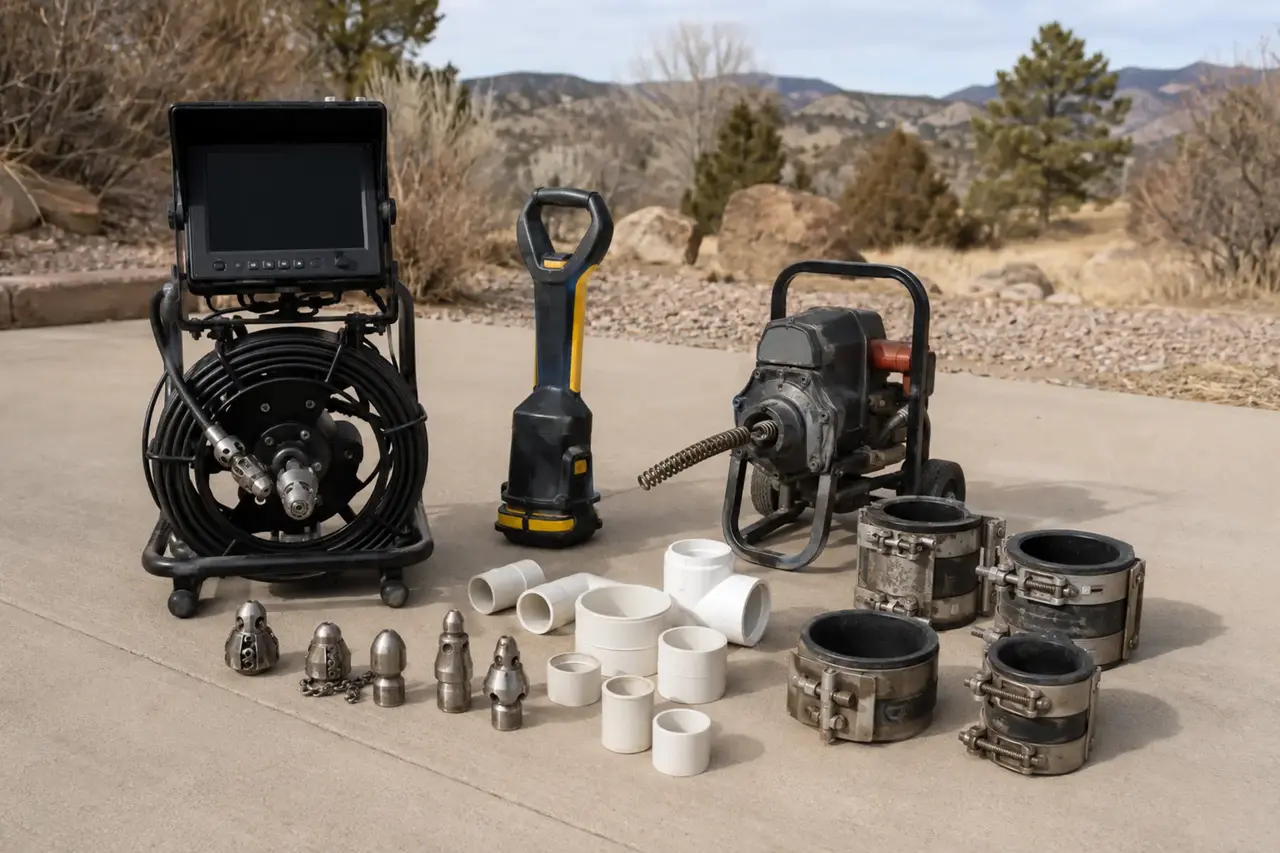
A blockage, camera-documented defect, uncertain route, and failed pipe each require a different combination of access, diagnosis, and service planning.
Pipe limits, method, connections, grade, testing, and required inspections.
Access, utilities, excavation, surfaces, landscaping, cleanup, and restoration.
Timing, price, exclusions, records, communication, and applicable warranty details.
Local sewer responsibility
In Pueblo, the City explains that the property owner owns and maintains the private service line and the sewer tap. Colorado Springs Utilities separately states that customers are responsible for the private wastewater service line and tap, while the utility maintains the public wastewater main. The exact location of the problem still needs to be established before responsibility or repair scope is assumed.
Properties outside centralized sewer coverage may use an on-site wastewater treatment system. On those properties, similar backup symptoms can involve the building sewer, septic tank, outlet components, or soil-treatment area. Confirming sewer versus septic is an important part of routing the correct request.
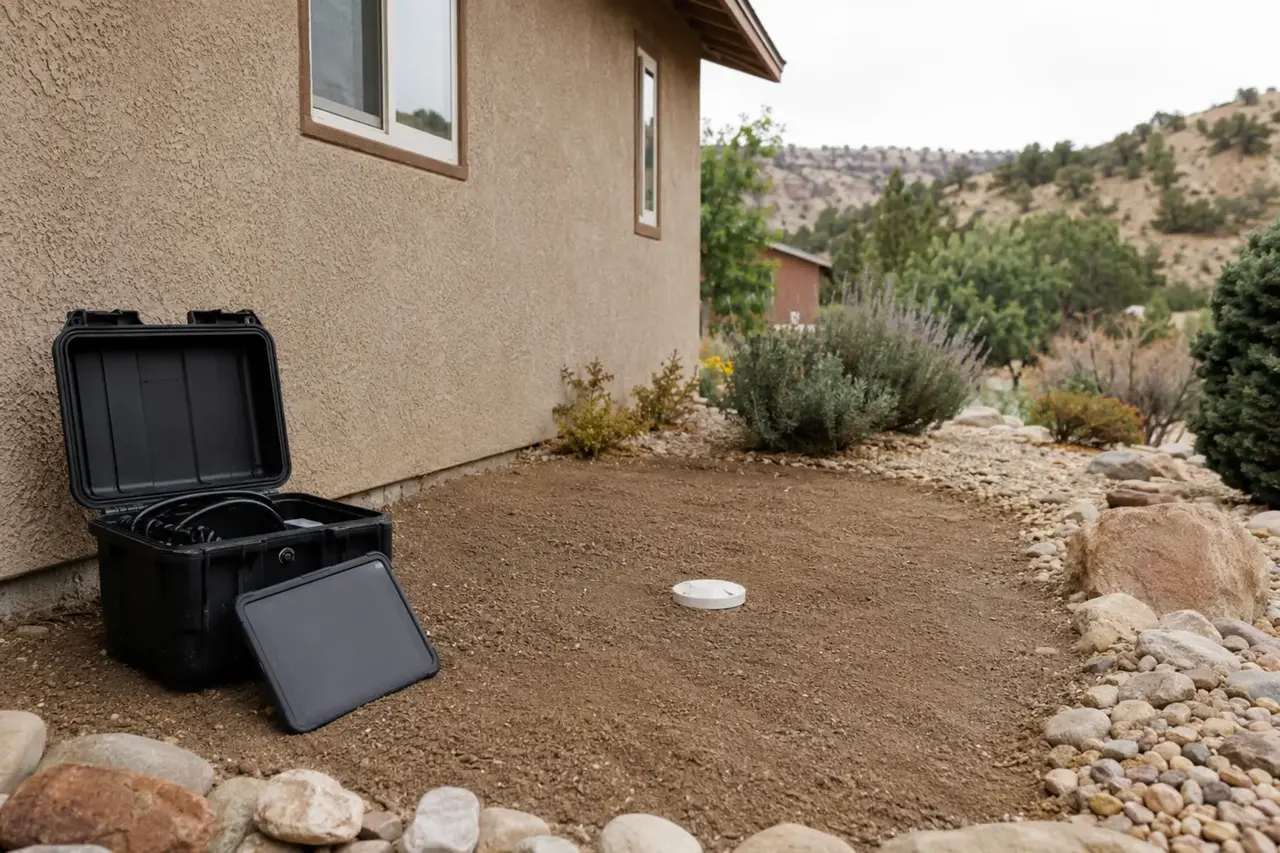
A finished scope should explain what happens after the underground work, including backfill, surface repair, cleanout protection, and final documentation.
Request process
The location, property type, symptoms, urgency, and requested service are reviewed.
A call or text may clarify access, urgency, and the likely diagnostic step.
Cleaning, camera inspection, locating, or site evaluation may be needed before repair options are confirmed.
Review the recommended method, included work, restoration, timing, price, exclusions, and warranty.