
Design and site conditions shape installation cost
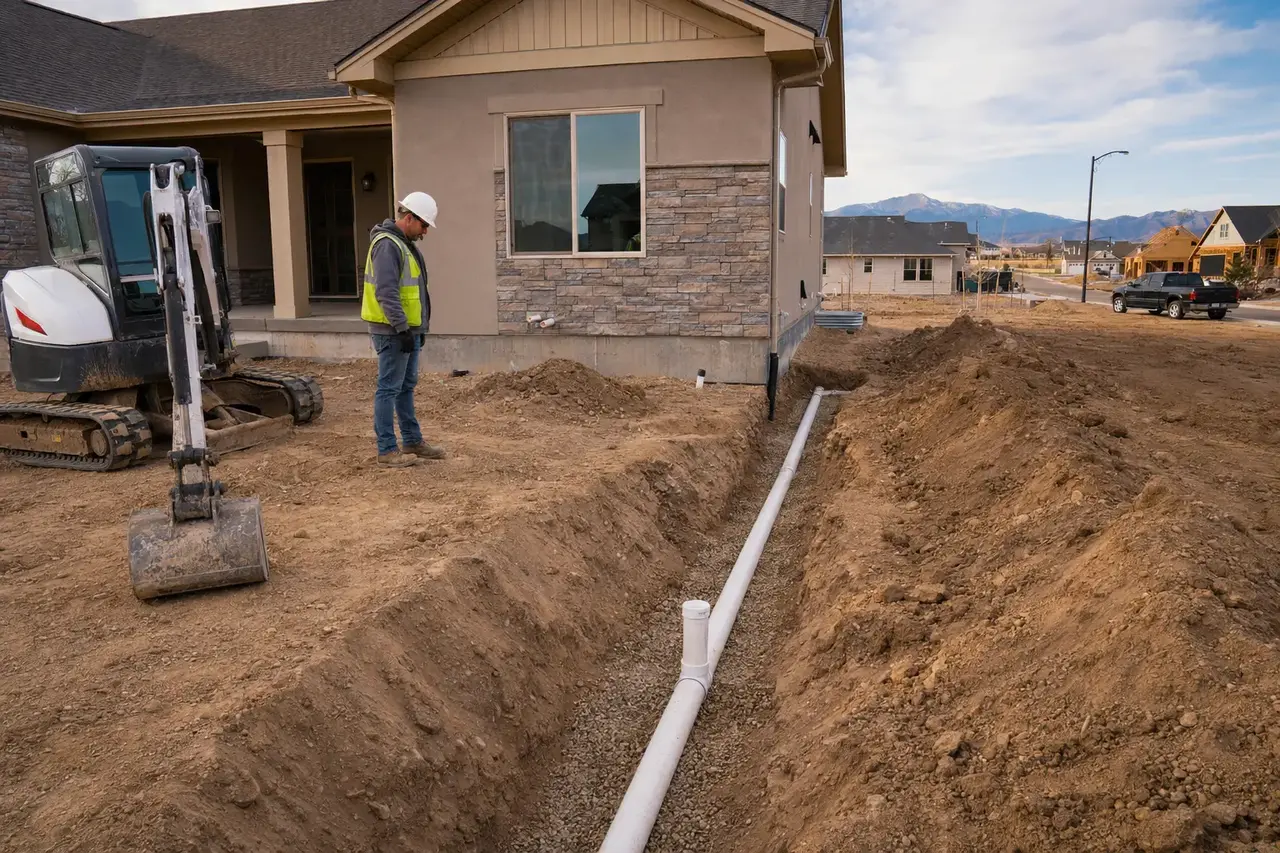
Length, depth, pipe diameter, connection elevation, soil, groundwater, equipment access, and utility conflicts affect labor and material. Work near a public right-of-way, pavement, retaining features, or an occupied site can add coordination and restoration beyond the private pipe.
- Plan review, surveying, and layout
- Tap or connection requirements and fees
- Excavation, bedding, backfill, and compaction
- Permits, testing, inspection, and records
- Concrete, asphalt, grading, or landscape restoration
Compare a complete utility scope, not a pipe-only allowance
A useful proposal identifies the approved start and end points, pipe size and material, cleanouts, fittings, testing, inspection, backfill, spoil handling, and surfaces included for restoration. It should also identify whether tap fees, utility charges, engineering, survey work, traffic control, right-of-way work, imported fill, paving, or an engineered pump system are separate.
Plans can support a preliminary price, but field conditions and final approvals still matter. Change terms should explain how unexpected depth, rock, groundwater, undocumented utilities, or a revised connection point would be handled before the scope expands.